Home Blog Page 15

Get to Know the AI Tech Stack

0

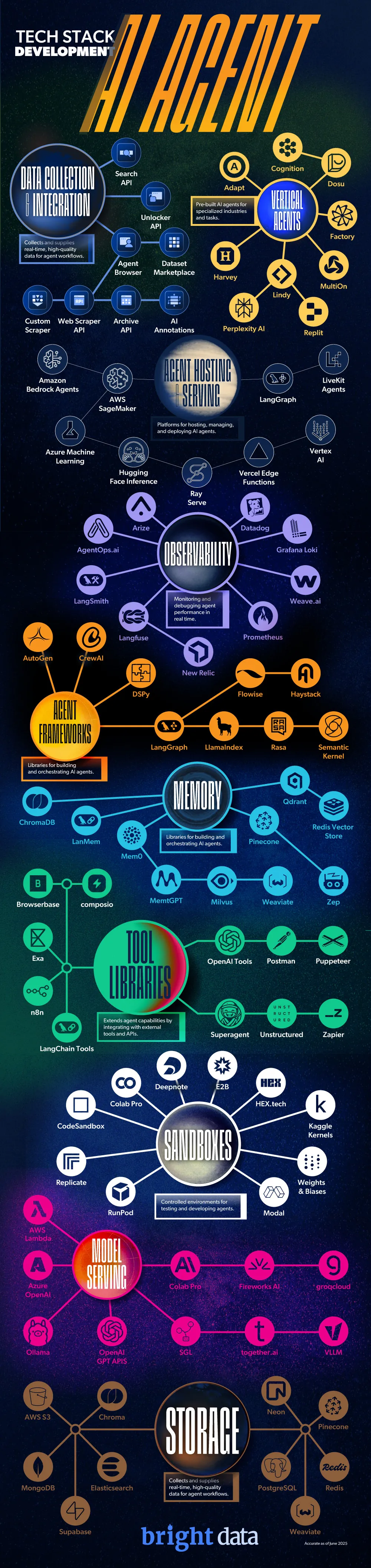
There are many factors to consider when designing an AI agent.  Luckily, the tech stack provides a framework in which developers can effectively build agents.  Made up of a system of layered tools, the tech stack is what enables agents to reason, act, and evolve. 


Data powers agents, making it the recommended starting focus for developers.  When it comes to the tech stack, data collection and integration is the layer in which developers connect the agent to data sources.  Perusing real-time data allows the agent to understand the world in which it operates, which allows it to make informed and accurate decisions. 


Another important layer of the tech stack is observability.  The tools in this layer help developers monitor agent performance and debug the agent in real time.  Several services exist in relation to observability.  For example, developers use LangSmith, Weights & Biases, and WhyLabs when considering observability.


There are many other layers in the tech stack, each with its own specific focus.  Examples of other layers include vertical agents, agent hosting services, tool libraries, sandboxes, and storage.  Dozens of platforms specialize in various layers of the tech stack, making them valuable tools for developers. 


The tech stack outlines the development process, connecting developers with a web of useful tools and frameworks.  Developers should get to know the tech stack, as this will make the development process much easier. 

Tech Stack Development: AI Agent
Source: Bright Data

Jordan Sudberg on Pinched Nerves vs. Muscle Strains

0

Jordan Sudberg Explains the Difference Between a Pinched Nerve and a Strained Muscle

Whether it’s a shooting pain down your leg or a dull ache in your back after a tough workout, pain can disrupt your life in unexpected ways. But understanding where the pain is coming from—and what type of injury it reflects—is key to getting the right treatment.

Two of the most common sources of musculoskeletal discomfort are pinched nerves and strained muscles. While their symptoms can seem similar at first, they involve different tissues, causes, and treatments.

According to Jordan Sudberg, a leading pain management specialist and medical director at Spine and Sports Rehabilitation, confusing the two conditions is a frequent problem that can delay recovery.

“Pinched nerves and muscle strains both cause pain and limited mobility, but they’re fundamentally different issues. Misdiagnosing one for the other can lead to the wrong treatment plan,” says Dr. Sudberg.

In this in-depth post, Dr. Sudberg breaks down the differences between pinched nerves and muscle strains, how to tell them apart, and what you should do if you’re experiencing either type of pain.


What Is a Pinched Nerve?

A pinched nerve (also known as nerve compression or impingement) occurs when surrounding tissues—like bone, cartilage, muscles, or tendons—apply too much pressure on a nerve. This disrupts the nerve’s ability to transmit signals and leads to a range of neurological symptoms.

Common causes of a pinched nerve include:

  • Herniated discs in the spine

  • Bone spurs from arthritis

  • Repetitive motion injuries

  • Poor posture or ergonomics

  • Trauma or inflammation

Pinched nerves can happen anywhere in the body, but they’re most common in the neck (cervical spine), lower back (lumbar spine), and wrists (carpal tunnel syndrome).


Symptoms of a Pinched Nerve

According to Dr. Sudberg, a pinched nerve often produces distinctive, nerve-related symptoms, including:

  • Sharp, shooting, or burning pain

  • Numbness or tingling (pins and needles)

  • Muscle weakness in the affected area

  • Pain that radiates (e.g., down the leg or arm)

  • Worsening pain when sitting, sleeping, or moving a certain way

“Radiating or electrical pain that follows a nerve pathway is often the biggest clue,” says Dr. Sudberg. “If your symptoms include numbness or weakness, we’re likely looking at a nerve issue, not just a muscle problem.”


What Is a Muscle Strain?

A muscle strain (sometimes called a pulled muscle) happens when muscle fibers are overstretched or torn due to overuse, excessive force, or sudden movements. Unlike nerve pain, muscle strains involve the muscle tissue itself, not the nervous system.

Common causes of muscle strains include:

  • Lifting heavy objects improperly

  • Sudden acceleration during exercise or sports

  • Repetitive motions without adequate recovery

  • Inadequate warm-ups or conditioning

Strains can range from mild (Grade I) to severe (Grade III), depending on how much damage has occurred to the muscle.


Symptoms of a Muscle Strain

Muscle strain symptoms are more localized and often include:

  • Dull, aching pain in a specific area

  • Muscle stiffness or tightness

  • Swelling or bruising

  • Pain during movement or use of the affected muscle

  • A “knotted” feeling in the muscle tissue

“With a muscle strain, the pain is usually tied to activity and improves with rest. There’s no tingling or shooting sensation, which you’d expect with nerve involvement,” explains Dr. Sudberg.


Diagnosis and Evaluation

When patients come in complaining of back, neck, or limb pain, Dr. Sudberg begins with a comprehensive physical exam, reviewing their medical history and daily habits. If symptoms suggest nerve involvement, he may order:

  • MRI or CT scans to view spinal discs or bone structures

  • EMG (electromyography) to test nerve function and muscle response

  • Nerve conduction studies to identify damaged or compressed nerves

“Imaging and nerve studies can tell us exactly where the issue lies—and how severe it is,” says Dr. Sudberg. “From there, we tailor the treatment.”


Treatment Options

For Pinched Nerves:

  • Rest and activity modification to reduce pressure

  • Physical therapy to strengthen supporting muscles and improve posture

  • Anti-inflammatory medications or corticosteroid injections

  • Chiropractic care or decompression therapy

  • Surgical options (like discectomy or laminectomy) in severe cases

For Muscle Strains:

  • R.I.C.E. protocol: Rest, Ice, Compression, Elevation

  • Over-the-counter pain relievers

  • Gentle stretching and massage

  • Physical therapy for moderate to severe strains

  • Gradual return to activity once healing has progressed

“In both cases, early intervention is key. The longer a pinched nerve goes untreated, the greater the risk of permanent damage. And ignoring a muscle strain can lead to chronic instability or repeated injuries,” Dr. Sudberg warns.


Preventing Future Injuries

Dr. Sudberg emphasizes prevention as a crucial part of any treatment plan.

For muscle strain:

  • Warm up properly before workouts

  • Use proper lifting techniques

  • Stay hydrated and maintain flexibility

For pinched nerves:

  • Practice good posture, especially at your desk

  • Avoid prolonged sitting or repetitive stress

  • Use ergonomic furniture and sleep support

  • Strengthen core and spinal support muscles

“Most of these issues are preventable with smart habits and regular movement,” says Dr. Sudberg. “It’s about body awareness and listening to your early warning signs.”


Final Thoughts: Listen to Your Body

Whether you’re dealing with a pinched nerve or a strained muscle, the key to recovery lies in understanding what’s really going on—and seeking the right kind of help. Misidentifying the cause of your pain can lead to wasted time, ineffective treatments, and prolonged suffering.

With experts like Jordan Sudberg, patients can expect not only a clear diagnosis, but a thoughtful and effective path to recovery.

“Pain is the body’s way of asking for attention,” Dr. Sudberg says. “The sooner we listen—and respond—the faster we can restore quality of life.”


Are Garden Pods Sustainable? A Simple Look at Eco-Friendly Outdoor Spaces

0

Garden pods have become popular for adding extra space without major construction. But you might be wondering, are they actually sustainable? The short answer is yes, garden pods can be sustainable, depending on the materials used and how they’re built.

If you choose pods made from eco-friendly materials like recycled wood or insulated panels, your impact is lower. Plus, many pods require less energy to heat and cool compared to traditional buildings, which helps reduce carbon footprints over time.

However, sustainability also depends on factors like where the pod is placed and how long you use it. Understanding these details can help you decide if a garden pod is the right sustainable choice for your needs.

What Makes Garden Pods Sustainable?

Garden pods often use materials and designs that reduce their impact on the environment. They prioritize energy efficiency and can be installed without heavy construction work. This means less waste and fewer disturbances to your outdoor space.

a wooden building with a wooden walkway between it

Environmental Impact of Garden Pods

Garden pods usually involve fewer materials than traditional home extensions, which means less resource use overall. Many pods use sustainably sourced wood, which is renewable and has a smaller carbon footprint compared to steel or concrete.

Because they are often prefabricated off-site, garden pods reduce on-site waste and minimize disruption to your garden’s soil and plants. The smaller size of pods also means they require less energy for heating, cooling, and lighting.

You can also find pods with features like green roofs or solar panels, which help lower their environmental impact even further by improving insulation and providing renewable energy.

Sustainable Design Principles

When you look at a garden pod, sustainable design is often about using natural insulation and materials that improve energy efficiency. Double-glazed windows, high-grade insulation, and airtight construction help keep your pod warm without extra heating.

The compact nature of garden pods means you don’t use excess energy to maintain large spaces. Many pods are designed to blend with your garden, often using wood and colors that connect with nature, helping reduce visual pollution.

You can often customize pods to include rainwater collection systems or energy-saving lighting, enhancing sustainability without much hassle.

Comparing Garden Pods to Traditional Extensions

Traditional home extensions usually need heavy building materials like concrete and bricks, which have a higher environmental impact. These builds often generate more construction waste and can take weeks or months to complete.

Garden pods, in contrast, arrive mostly pre-built and can be installed quickly, reducing noise and air pollution during construction. This limits long-term disruption to your garden and your neighborhood.

In energy terms, a garden pod’s smaller footprint often means lower heating and cooling bills. Extensions can add considerable space that may be used inefficiently, while pods provide just enough space with better insulation and modern design.

Eco-Friendly Materials and Construction Methods

When thinking about garden pods, it’s important to look at the materials and building techniques used. The right choices here can reduce environmental impact while making your outdoor pod last longer and look better.

Responsible Sourcing of Timber and Other Materials

If your garden pod uses timber, check that it’s certified by organizations like FSC or PEFC. These certifications mean the wood comes from forests managed in ways that protect wildlife and avoid over-harvesting.

Besides wood, materials like insulation and cladding can also be sourced responsibly. Avoid products with heavy chemicals or non-recyclable plastics. Many suppliers now offer options that reduce waste and pollution during production.

Use of Recycled and Renewable Resources

Some garden pods incorporate recycled materials like reclaimed wood or recycled metal frames. This cuts down on raw material use and keeps waste out of landfills.

Renewable materials like bamboo are gaining popularity too. Bamboo grows quickly and naturally absorbs carbon dioxide, making it a smart choice for eco-friendly outdoor pods.

Look for pods that combine these resources with low-impact adhesives and finishes. These help reduce harmful VOC emissions inside your pod and lower its environmental footprint.

Durability and Longevity of Garden Pods

A sustainable garden pod isn’t just about materials; it’s also how well it lasts. Durable construction means fewer replacements and less waste.

Check for weather-resistant coatings and joinery techniques that prevent rot and damage. Longer-lasting pods save resources over time and keep maintenance low.

Quality design will also consider how easy it is to repair or upgrade parts rather than replace the whole pod. This flexibility helps extend your pod’s life while keeping it eco-friendly.

Energy Efficiency and Power Solutions

Your garden pod’s energy use depends a lot on how well it keeps heat in or out, manages airflow, and what kind of power sources it uses. These factors determine how much energy you’ll actually save and how comfortable the space stays year-round.

Insulation and Thermal Performance

Good insulation is a must if you want your garden pod to stay cozy without cranking up energy use. Most pods use materials like foam boards or recycled insulation, which reduce heat loss in winter and keep things cool in summer. Walls, floors, and roofs are often insulated to a thickness that meets or exceeds building regulations.

Double or triple-glazed windows are common, cutting down drafts and retaining warmth. That means your heating system won’t have to work as hard. Proper insulation can lower your energy bills and reduce your carbon footprint.

Heating, Cooling, and Ventilation

Heating solutions vary from electric radiators to underfloor heating. Each option has pros and cons depending on your pod’s size and insulation quality. Efficient heating keeps your energy use low while maintaining comfort.

Cooling is usually passive, relying on ventilation. Many pods include vents or windows you can open for airflow. Some use small heat recovery ventilation units to maintain fresh air without throwing away warmth. This balance keeps the environment healthy without wasting power.

Integration of Solar Panels and Renewable Energy

Adding solar panels to your garden pod can cut your reliance on the grid. You can install panels on the pod’s roof or nearby structures to generate electricity on-site. This works well if your pod uses low-energy appliances or LED lighting.

Solar power can be paired with batteries to store excess energy for nighttime use. Using renewable sources in your setup not only decreases your energy costs but also lowers your environmental impact. Consider this if you want an energy-smart pod.

Enhancing Outdoor Space with Sustainable Pods

Using garden pods is a smart way to improve your outdoor space without harming the environment. You can make the most of your surroundings by choosing designs and placements that work with nature, light, and landscaping.

Blending Garden Pods with Nature

When you install a garden pod, pick materials and colors that match your natural setting. Wood with natural finishes or recycled materials can help the pod feel like it belongs in your garden.

Position the pod near existing trees or plants to keep it hidden from harsh sun and strong winds. This also helps protect local wildlife and keeps your outdoor space peaceful. Using native plants around the pod supports local ecosystems and reduces maintenance.

Maximizing Natural Light and Outdoor Views

You want your garden pod to feel open and connected to your outdoor space. Choose large windows, skylights, or glass doors to bring in plenty of daylight. This reduces the need for artificial lighting.

Arrange the pod so the windows face views you enjoy the most, like a garden bed or trees. This makes your pod a relaxing spot to spend time. Using double or triple glazing helps keep the pod insulated while still letting in natural light.

Low-Impact Landscaping and Placement

Think carefully about where you place your garden pod to avoid disrupting your garden unnecessarily. Place it on already disturbed ground or paved areas if possible.

Use permeable materials for pathways and decks around the pod to minimize water runoff. It keeps the ground healthy and prevents erosion. You can also incorporate rainwater collection or green roofs to reduce environmental impact while enhancing the look of your outdoor space.

Conclusion

Garden pods can be a smart choice if you’re looking for a more eco-friendly way to add space to your garden. They often use sustainable materials like timber and can be energy-efficient with proper insulation.

If you care about reducing your carbon footprint, look for pods with eco-certifications and options for renewable energy, like solar panels.

Keep in mind, the sustainability of your pod depends on factors like manufacturing, transport, and how you use it.

Here’s a quick checklist for choosing a sustainable garden pod:

  • Made from responsibly sourced materials
  • Good insulation to save energy
  • Minimal packaging and transport emissions
  • Options for renewable energy use
  • Longevity and recyclability

By focusing on those, you can make your garden pod more environmentally friendly. It’s about small choices adding up rather than any pod being perfect by itself.

You can enjoy the benefits of extra space without a big environmental impact if you plan carefully.


Common Myths About Personal Injury Cases Busted by Miami Lawyers

0

You might believe you need severe injuries to claim compensation, but the team at the Law Offices of Anidjar and Levine clarifies that even moderate or emotional harm may qualify. Most personal injury lawsuits settle out of court, and insurance rarely covers all damages automatically.

Waiting too long to file can forfeit your rights, and you should seek medical attention even if you feel fine, as hidden injuries are common. Legal fees are usually contingent, so pursuing minor accidents isn’t prohibitively expensive.

Discover more about these essential distinctions by consulting a Miami Personal Injury Lawyer today.

You Must Be Severely Injured to Have a Valid Claim

A common misconception is that only individuals with severe or catastrophic injuries are entitled to pursue a personal injury claim. In reality, the law recognizes your right to seek compensation even for moderate or less visible injuries that disrupt your daily life or ability to serve others. If you sustain injuries—no matter their severity—you should not dismiss your potential claim. Instead, focus on gathering thorough medical documentation, as this evidence is vital for substantiating your injuries and demonstrating their impact. Promptly seeking medical attention further strengthens your case by creating an official record. You must also remain aware of claim deadlines, as failing to file within the required time frame can result in the loss of your right to recover compensation. By understanding these crucial elements, you ensure you’re equipped to advocate for yourself and others, fostering a culture of accountability and care within your community.

Personal Injury Lawsuits Always End Up in Court

Misunderstandings about personal injury cases extend beyond the nature of injuries to the legal process itself. Many people assume that every personal injury lawsuit inevitably proceeds to a courtroom trial, but this is a misconception. In reality, most cases are resolved through negotiations and settlements, which are integral parts of legal procedures. As someone dedicated to serving others, it’s important to understand that effective communication and negotiation often lead to favorable resolutions without the need for a trial.

The likelihood of court outcomes depends on several factors, including the willingness of both parties to reach an agreement and the intricate nature of the dispute. Miami lawyers emphasize that litigation is generally a last resort, pursued only when settlement efforts fail or liability is heavily contested. By understanding the full spectrum of legal procedures, you’re better equipped to support individuals through the process and manage expectations regarding the actual chances of going to court.

Insurance Will Cover All Your Expenses Automatically

Frequently, people expect insurance to seamlessly address every financial need following a personal injury, yet this assumption rarely matches reality. One of the most persistent insurance myths is that coverage will automatically compensate you for all losses, regardless of the injury severity or circumstances. In truth, insurance companies often scrutinize claims, contesting expenses or disputing the necessity of certain treatments. They may also undervalue your claim or deny parts of it, especially when the link between your injuries and the incident is questioned.

You must understand that insurance policies contain specific limits, exclusions, and procedures that can substantially affect your compensation. The severity of your injury does not guarantee a corresponding payout, as insurers frequently seek to minimize their financial responsibility. If your goal is to advocate for others’ well-being, it’s crucial to recognize these limitations and guide those affected by personal injury toward seeking thorough legal advice, ensuring their rights remain protected.

You Can File a Claim Anytime After an Accident

While understanding insurance limitations is fundamental, it’s equally important to recognize the strict time constraints that impact your ability to seek compensation after an accident. Contrary to popular belief, you cannot file a claim at any time following an incident. Legal procedures, including statutes of limitations, set clear deadlines for initiating personal injury claims. Missing these deadlines can result in losing your right to recover damages, regardless of the severity of your injuries or the clarity of liability.

Insurance policies also contain notification requirements, often mandating prompt reporting of an accident to preserve your coverage. Delaying action not only jeopardizes your claim but can also hinder the investigation process, making it harder for you to serve those who rely on your support. To best assist others, you must act quickly, familiarize yourself with relevant timelines, and consult a legal professional to ensure adherence to all procedural requirements and policy guidelines.

Only Physical Injuries Are Compensated

You might think personal injury cases only cover physical harm, but the law recognizes other types of losses as well. Emotional distress, lost wages, and property damage are all compensable in many claims, depending on your circumstances. Understanding how these elements are evaluated can help you pursue the full range of compensation you ought to receive.

Emotional Distress Damages Explained

Although many individuals assume that personal injury cases only recognize physical harm, the law also allows for compensation related to emotional distress in certain circumstances. If you’ve experienced anxiety, depression, or other psychological impacts following an accident, you may be entitled to emotional damages in addition to physical injury claims. Courts understand that trauma can extend beyond what is visible, and distress compensation reflects the significant effect these experiences have on your well-being. When serving others, it’s vital to acknowledge the importance of psychological health in recovery. By accurately documenting your emotional struggles and obtaining professional evaluations, you strengthen your case for emotional damages. Miami lawyers can guide you through this process to guarantee your rights are protected and that all forms of harm, both seen and unseen, are addressed.

Lost Wages Compensation Overview

Many people mistakenly believe that compensation for lost wages in personal injury cases is limited solely to physical injuries. In reality, lost wages can be claimed if your injury, whether physical or psychological, prevents you from working or earning your usual income. To support your claim, you must provide reliable medical records documenting the nature and extent of your injuries, as well as wage documentation such as pay stubs, employer statements, or tax returns. These records establish the direct connection between your injury and your inability to work, ensuring that your claim is both credible and substantiated. By understanding this process, you can better support others facing similar challenges and help them chart the intricacies of personal injury compensation with greater confidence and clarity.

Property Damage Claims

Surprisingly, some assume that personal injury claims only address compensation for physical injuries, overlooking the significant role of property damage claims in these cases. As someone dedicated to serving others, you should understand that compensation often extends to damaged property, such as vehicles, electronics, or other personal belongings harmed in an incident. Property valuation is a vital step in determining fair compensation, as accurate assessments ensure just outcomes for all involved. Insurance claims processes frequently address both bodily injury and property damage, requiring clear documentation and careful negotiation. By recognizing the importance of property damage claims, you can better guide others through the claims process, ensuring that all legitimate losses—both physical and material—are properly considered and addressed in personal injury cases.

Hiring a Lawyer Is Too Expensive

While concerns about the cost of legal representation often deter individuals from seeking help, the perception that hiring a personal injury lawyer is prohibitively expensive does not reflect the reality of most cases. In fact, most personal injury attorneys operate on a contingency fee basis, meaning you pay nothing upfront and only owe fees if your case results in a successful outcome. This arrangement opens the door for those with limited resources to access quality legal support, ensuring financial planning is not compromised. Moreover, lawyers handle vital legal documentation, minimizing errors and protecting your interests.

Fee Structure Client Benefit Impact on Access
Contingency Fees No upfront costs Affordable for all
Free Consultations Risk-free case review Informed decisions
Legal Documentation Reduces client burden Accurate filings
Financial Planning Budgeting guidance Less financial stress

Minor Accidents Aren’t Worth Pursuing

You might assume that minor accidents aren’t worth pursuing, but this belief can lead to significant losses. Injuries that seem insignificant at first often develop into more serious conditions over time, requiring medical attention and extended recovery. Additionally, compensation in personal injury cases can cover a range of damages, including medical expenses, lost wages, and pain and suffering, making it important not to dismiss your claim prematurely.

Hidden Injuries Often Surface

Although a collision may appear minor at first glance, it’s common for injuries to manifest hours or even days after the incident. You may initially feel unharmed, but hidden injuries such as whiplash, soft tissue damage, or mild concussions often present delayed symptoms. These conditions can impact your ability to care for others or perform your usual responsibilities, especially if your work or volunteer efforts depend on your physical well-being. Recognizing the possibility of delayed symptoms allows you to take prompt action—seeking medical attention and documenting any changes in your condition. By addressing hidden injuries early, you protect not only your own health but also your capacity to serve those around you. Never underestimate the seriousness of seemingly minor accidents.

Compensation Covers More Damages

Despite the common belief that minor accidents aren’t worth pursuing, the reality is that compensation in personal injury cases encompasses far more than immediate medical expenses. Many insurance myths and legal misconceptions suggest that only severe injuries justify legal action, but even so-called minor incidents can lead to significant financial and emotional burdens. As someone committed to serving others, you should understand that damages can extend beyond the initial incident, potentially impacting a person’s quality of life, income, and well-being.

Consider the broader scope of compensation:

Medical Bills Lost Wages Pain and Suffering
Rehabilitation Future Earnings Emotional Distress
Prescription Job Retraining Loss of Enjoyment
Follow-up Care Disability Anxiety/Depression
Transportation Career Impact Lifestyle Changes

Understanding this extensive approach can help you advocate more effectively.

The Responsible Party Will Pay Out of Pocket

Many people assume that the individual responsible for an accident must personally pay for damages in a personal injury case, but this belief rarely aligns with how compensation is actually provided. In reality, most personal injury settlements or verdicts are paid by insurance companies, not directly by the at-fault party. This misconception stems from common liability myths and misunderstandings about insurance intricacies that shape public perception. If you’re focused on helping others through the aftermath of an accident, it’s vital to recognize the mechanisms that truly support victims.

Most personal injury payouts come from insurance companies, not individuals, challenging common myths about who truly provides compensation after an accident.

Consider these facts:

  1. Insurance policies exist to cover most personal injury claims, ensuring compensation is available for those harmed.
  2. The responsible party’s assets are usually protected unless the damages exceed policy limits.
  3. Legal proceedings often involve negotiations with insurers, not individuals.
  4. Understanding these insurance intricacies can help you guide others through the process, dispelling liability myths and fostering realistic expectations.

You Don’t Need Medical Attention if You Feel Fine

Understanding how compensation works is only part of protecting your interests after an accident; attending to your health is equally significant. Many believe that if they feel fine immediately after an incident, medical attention isn’t necessary. However, this assumption can stem from emotional bias or adrenaline masking symptoms, leading to medical neglect. Delayed injuries, such as whiplash or internal trauma, often surface hours or days later, potentially complicating recovery and legal claims. As someone devoted to serving others, you should encourage prompt medical evaluation for yourself and anyone affected.

Myth Reality
No pain equals no injury Injuries may not show symptoms immediately
Self-assessment is enough Professionals detect hidden injuries
Medical visits are optional Documentation supports your legal case
Delay doesn’t affect claims Waiting can weaken compensation arguments

Prioritizing health not only safeguards well-being but also strengthens your position should you pursue a personal injury claim. Avoiding medical neglect ensures you act responsibly for yourself and those you assist.

Conclusion

By understanding the realities behind these common myths, you’ll be better equipped to make informed decisions following an accident. Personal injury claims are intricate, and misconceptions can severely impact your rights and compensation. If you believe you have a case, consult the Law Offices of Anidjar and Levine or a qualified Miami personal injury lawyer as soon as possible. Their knowledge guarantees that your claim is handled correctly and that you receive the full protection and compensation the law affords you in these challenging circumstances. For more information, visit a Miami Personal Injury Attorney.

The Truth Behind Some of the Internet’s Biggest Arrests

0

In today’s digital era, going viral doesn’t always bring fame for the right reasons. Some of the internet’s most talked-about arrests didn’t start in dark alleyways or hidden corners of the world, but on public platforms like YouTube, Instagram, TikTok, or Twitter. The rise of digital fame has introduced a new layer to crime and accountability, where influencers, entertainers, tech experts, and even everyday internet users have found themselves behind bars.

From content creators accused of fraud to musicians caught up in cyber schemes, the internet has become a powerful stage where both success and scandal play out in real-time. This article explores the real stories behind high-profile internet-related arrests—and how people from various walks of life ended up on the wrong side of the law.

When Likes Turn Into Legal Trouble

In many cases, content creators chase engagement without fully understanding the legal consequences of their actions. One of the most striking examples involved a YouTuber who filmed elaborate “pranks” in public spaces—only to be arrested for disorderly conduct and harassment.

These so-called “harmless” stunts often cross into criminal territory when they put others at risk or cause property damage. In one case, a social media personality was sentenced after staging a fake bank robbery as part of a video shoot. What was intended as entertainment led to public panic, a police response, and real jail time.

Such incidents remind us that viral content can easily attract legal attention if it crosses ethical or safety boundaries.

The Digital Age of Fraud

While traditional fraud cases often involve paperwork and financial trails, the internet has modernized these crimes. Online scams, fake promotions, and cryptocurrency-related deception have grown rapidly. Several influencers and self-proclaimed “business gurus” have been arrested for scamming followers into investing in fake products or schemes.

One such influencer promised quick returns through a flashy online investment platform that turned out to be a pyramid setup. After thousands of followers lost money, authorities launched an investigation that resulted in serious charges including wire fraud and money laundering.

For those curious about how people from all backgrounds—artists, singers, tech enthusiasts, entrepreneurs—ended up in jail, Why Go To Jail offers real-life stories and deep dives into surprising legal downfalls involving public personalities and internet figures alike.

Hacking and Cybercrime Cases That Shocked the World

Another area where online fame and legal violations often intersect is cybercrime. While some hackers operate from the shadows, others have publicly boasted about their skills—only to be tracked down and arrested for unauthorized access, data breaches, and privacy violations.

In a high-profile case, a well-known hacker-turned-social-media-influencer was arrested for breaching multiple corporate servers and leaking user information online. Though initially praised by fans for exposing security flaws, law enforcement viewed the actions as illegal and dangerous.

These arrests highlight how cybercrime, even when framed as “ethical hacking,” can carry serious consequences. Legal systems across the globe are now treating such offenses with the same weight as traditional crimes.

Fame Doesn’t Guarantee Immunity

One of the internet’s illusions is that fame somehow offers protection—but time and again, the law has proven otherwise. Several online celebrities, including TikTok dancers, YouTubers, and livestreamers, have been arrested for behavior ranging from tax evasion to inciting public unrest.

In one case, a popular vlogger organized a street event without a permit. The crowd became uncontrollable, leading to injuries and property damage. Authorities later charged the influencer with inciting a riot. What began as a meet-and-greet ended with handcuffs and headlines.

Even some musicians and actors who made their careers through digital platforms have faced similar legal consequences. The nature of their stardom doesn’t shield them from facing jail time when laws are broken—intentionally or not.

Online Speech, Real-World Impact

Social media has amplified freedom of speech, but it has also raised questions about the boundaries of expression. Several arrests have occurred over posts deemed threatening, misleading, or inciting violence. While different countries have varying standards, some content that appears harmless to a creator may be interpreted as illegal by authorities.

A singer with a massive online following once faced charges for posting misleading health advice during a public crisis. Another artist was arrested after posting controversial political content that was seen as a violation of local laws.

In such cases, the internet provides a global stage, but the law remains grounded in national boundaries. What’s legal speech in one place might be considered a punishable offense elsewhere. Public figures must navigate this carefully to avoid legal backlash.

Privacy Violations and Surveillance Misuse

Some internet personalities have landed in jail after violating others’ privacy—whether by filming without consent, tracking individuals, or sharing sensitive personal data online. With smartphones and streaming tools readily available, it has become easier than ever to unintentionally break privacy laws.

One case involved a fitness influencer who used hidden cameras in public gyms to create content. The videos, which featured unsuspecting individuals, were posted without consent and eventually led to legal charges for privacy invasion.

Actors and artists have also been caught in similar controversies, especially when using paparazzi-like tactics to create shocking or viral content.

Influencers and Accountability: A New Legal Frontier

As internet fame grows, courts are now looking at influencers as not just content creators but also business owners, advertisers, and public figures. This shift means they are held accountable under more complex laws—including advertising standards, consumer protection rules, and platform policies.

One YouTuber was arrested after promoting a weight-loss supplement without disclosing that they were being paid to do so. When customers suffered side effects and complaints were filed, authorities viewed the lack of transparency as deceptive advertising, leading to criminal charges.

This evolving standard also applies to singers, entrepreneurs, and entertainers who endorse products or host monetized events. Transparency, truthfulness, and legal compliance are becoming non-negotiable expectations.

Social Justice and Legal Overreach

Not every internet-related arrest has been cut-and-dry. In some cases, online personalities have faced charges many viewed as politically motivated or overly harsh. For example, digital activists speaking out on social issues have been arrested for organizing online protests or calling for government reform.

In such instances, legal systems are scrutinized for overreach, and public outcry often follows. The stories reveal the tension between free expression and state control—especially when online platforms are used to mobilize support or share controversial opinions.

Though laws must be respected, these incidents remind us of the fine line between enforcement and suppression.

Lessons from Internet Arrests: Fame Is a Double-Edged Sword

What makes these cases so shocking is the speed at which internet personalities rise—and fall. One viral post can launch a career, and another can spark a courtroom battle. The visibility that brings millions of views also brings greater scrutiny from both the public and legal authorities.

Whether it’s an actor misusing influence, a singer violating laws unknowingly, or a digital creator ignoring boundaries, the internet does not protect against real-world consequences.

In the end, the truth behind the internet’s biggest arrests is not just about guilt or innocence—it’s about responsibility. The more followers one gains, the more carefully they must navigate laws, ethics, and platform rules. Public figures, regardless of their starting point, are expected to lead with integrity, not shortcuts.

Conclusion

The internet has opened doors to opportunity, connection, and creativity, but it has also made the consequences of missteps more immediate and visible. Jail time is no longer reserved for traditional crimes; it now includes digital fraud, misinformation, misuse of influence, and online privacy violations.

The world is watching more closely than ever before. And whether you’re an artist, a CEO, a gamer, or a casual content creator, understanding the legal boundaries is no longer optional—it’s essential.

When Faith Meets Authenticity: Bill Hulseman’s “six to carry the casket and one to say the mass” Offers a New Vision for the Spiritually Curious

0

This Bold Essay Collection Invites Readers to Reimagine What It Means to Believe, Belong, and Be Seen

What happens when the stories we’ve inherited no longer make sense? When the rituals we once found comforting start to feel confining? For anyone who has wrestled with questions of faith, identity, or belonging, Bill Hulseman’s debut collection, six to carry the casket and one to say the mass, offers something rare: a deeply personal, radically honest, and profoundly hopeful reimagining of spiritual life.

Released on July 8, 2025, six to carry the casket and one to say the mass is not your typical religious memoir. It’s a work of vulnerability and vision, shaped by Hulseman’s experience as a gay man raised in a devout Catholic family and forged in the tension between reverence and resistance. Through a series of elegant, self-interrogating essays, Hulseman explores how we carry the weight of identity, community, grief, and transformation—and how, in time, we learn to carry it differently.

Hulseman’s reflections are not just for those who were raised Catholic or identify as LGBTQ+. They are for anyone who’s ever stood at the crossroads of tradition and truth, wondering if it’s possible to honor the past while stepping fully into the future. Spoiler alert: it is. And Hulseman shows us how—with a voice that is pastoral, poetic, and unafraid.

From the very first essay, Hulseman draws readers into the emotional landscape of growing up as “the ornament” in a large, religious household where silence often spoke louder than support. Yet instead of painting his upbringing in black-and-white terms, he brings nuance. There is love in his storytelling—love for his family, his students, his mentors, and even the Church that asked him to hide. That complexity is what makes the book so compelling: it’s not about deconstructing belief to destroy it; it’s about deconstructing belief to reclaim it.

The title itself—six to carry the casket and one to say the mass—is rich with imagery and metaphor. It references Catholic funeral traditions, yes, but also hints at the communal nature of life, death, and storytelling. In Hulseman’s view, we are all both mourners and ministers, carrying and commemorating what came before us. The question becomes: what do we want to carry forward?

The essays move fluidly through themes of faith, queerness, education, grief, and pop culture. There are moments of levity—like Hulseman’s ode to Madonna’s “Ray of Light” as a queer spiritual anthem—and moments of deep introspection, such as his accounts of teaching religion in schools while quietly holding his truth. Each chapter offers an invitation, not an instruction. Readers are never told what to believe, but rather encouraged to ask better, braver questions.

One of the most striking qualities of this collection is its tenderness. Hulseman writes like someone who has been broken open by life and has chosen to meet that brokenness with compassion rather than cynicism. His prose doesn’t shy away from anger or grief, but it always circles back to connection—between people, ideas, and the sacred.

He makes a strong case that spirituality doesn’t require conformity. It requires attention. Attention to what stirs your soul, what holds your pain, and what brings you back to life. For Hulseman, that might be a liturgical prayer, a classroom conversation, or a memory wrapped in grief. For others, it might be something else entirely. The point is not to replicate his experience but to honor your own.

In the book’s final section, focused on queer identity, Hulseman reframes Pride as a spiritual act—not just a celebration, but a form of liturgy. “We are not stuck with the identity we inherit,” he writes. “The challenge—and the gift—is deciding what to keep and what to let go.” It’s a line that captures the spirit of the entire collection.

Ultimately, six to carry the casket and one to say the mass is not about loss—it’s about becoming. About what happens when we allow ourselves to be fully seen, fully heard, and fully human. For those navigating transitions of faith, identity, or belonging, this book doesn’t promise easy answers. It offers something better: accompaniment.

You can purchase six to carry the casket and one to say the mass in hardcover from Amazon, Allstora, Pathway, Barnes & Noble, or your favorite indie bookstore.

To learn more about Bill Hulseman, his writing, upcoming events, and weekly meditations, visit www.billhulseman.com.

The ROI of Corporate Wellness: A Gym Owner’s Perspective

0

Corporate wellness is no longer a luxury or trend—it’s a strategic investment. In the past decade, more businesses have begun recognizing that healthy employees are more productive, engaged, and loyal. What was once an HR checkbox has become a serious line item in company budgets—and the return on investment (ROI) is measurable.

As a gym owner who has worked directly with small businesses, large corporations, and everything in between, I’ve seen how corporate wellness programs can transform company culture, improve workforce performance, and cut long-term costs. But I’ve also seen programs fail when approached as short-term fixes or marketing stunts.

In this article, I’ll break down what corporate wellness really delivers, what makes it work, how to measure ROI, and how fitness facilities can become key partners in its success. Whether you’re an HR manager looking to evaluate a gym partnership or a gym owner thinking about offering wellness programs to local companies, this guide will give you a practical, numbers-backed perspective.


What Is Corporate Wellness, Really?

Corporate wellness refers to any organized effort by an employer to support employees’ physical, mental, or emotional health. This might include:

  • On-site or off-site fitness classes

  • Gym membership stipends or subsidies

  • Health screenings and biometrics

  • Mental health resources or EAPs

  • Nutrition coaching

  • Step challenges or fitness trackers

  • Workshops on stress management or sleep

Wellness programs aren’t limited to tech companies or Fortune 500 firms. Many small and medium-sized businesses now run programs of their own—some as simple as sponsoring a local gym membership, others as robust as offering weekly on-site personal training.


The Business Case: Why Companies Invest in Wellness

The biggest misconception I hear from business owners is that wellness is a perk, not an asset. That it’s about being “nice,” not smart. The truth is: wellness initiatives, when designed well, offer measurable returns.

Let’s look at what the data says.

1. Reduced Health Care Costs

  • According to the CDC, employers who implement wellness programs can see a reduction in health care costs of 25% or more over time.

  • A Harvard study analyzing multiple corporate wellness programs found that medical costs fall by $3.27 for every dollar spent on wellness.

2. Lower Absenteeism

  • The same Harvard study found that absenteeism costs fall by $2.73 for every dollar spent.

  • Fit employees are less likely to miss work due to illness, chronic pain, or fatigue.

3. Increased Productivity

  • A 2022 report by the International Foundation of Employee Benefit Plans found that 52% of companies observed improved productivity due to wellness initiatives.

  • Regular exercise is linked to better cognitive function, mood regulation, and energy levels—all critical for knowledge workers.

4. Improved Retention and Morale

  • SHRM reports that over 60% of employees say wellness benefits are a deciding factor in accepting a job offer.

  • Wellness programs show employees the company cares about their health, increasing loyalty and reducing turnover.


Real ROI: A Gym Owner’s Firsthand Account

At my gym, we’ve partnered with multiple local companies to provide tailored wellness services. Here’s what I’ve seen over time:

📈 Case Study: Tech Company, 60 Employees

Services Provided:

  • Weekly on-site fitness classes

  • Monthly fitness assessments

  • Access to gym memberships for employees

Observed Results (within 12 months):

  • Sick days per employee dropped by 1.8 days/year

  • Healthcare premium increases were 40% lower than projected

  • Employee survey scores for “work-life balance” improved by 30%

  • Retention improved from 83% to 92%

ROI Estimate:
For every dollar spent (approx. $500 per employee/year), the company saved roughly $2.10 in reduced absenteeism and medical expenses.

And just as important, they noticed higher engagement at work and stronger interpersonal connections—employees began working out together outside of scheduled classes.


What Makes Corporate Wellness Actually Work?

✅ 1. Leadership Buy-In

If leadership doesn’t participate or value the program, neither will employees. The most successful rollouts I’ve seen had CEOs or managers who joined classes and encouraged participation.

✅ 2. Consistent Communication

You can’t announce a wellness initiative once and expect results. Employers must remind staff of the resources, share results, and celebrate wins.

✅ 3. Customization

A one-size-fits-all approach won’t work. A team of engineers may need a different program than a group of warehouse workers. Flexibility is key—different people have different needs and preferences.

✅ 4. Onboarding + Ease of Access

If joining a class or redeeming a gym pass feels like a hassle, engagement drops fast. Make it simple. We found that scheduling classes during lunch hours or immediately after work had the highest participation.


The Role of Gyms in Corporate Wellness

As a gym owner, you’re in a unique position to serve local businesses—if you’re prepared.

Here’s what your facility can offer:

1. On-Site Training or Classes

  • Bring a coach to the workplace for weekly fitness sessions

  • Great for companies that don’t have gym space but want engagement

2. Gym Access Packages

  • Offer group discounts or monthly billing for businesses

  • Include group onboarding so employees feel welcomed from day one

3. Corporate Wellness Consulting

  • Help companies design a sustainable program with fitness, nutrition, and recovery in mind

  • This elevates your role from vendor to strategic partner

4. Fitness Challenges

  • Organize quarterly step or training challenges with prizes and leaderboards

  • Gamification drives participation and community building

5. Health Tracking and Assessments

  • Offer optional biometric screenings, body composition tracking, and goal setting

  • These services give companies measurable data for HR reports


Measuring the ROI of Corporate Wellness

HR leaders and business owners are right to ask: “How do I know this is working?” ROI doesn’t always show up in direct dollars immediately—but here’s what we track to demonstrate value:

Metric What It Indicates
Employee Participation Rate Buy-in and program appeal
Average Sick Days per Employee Wellness impact on absenteeism
Healthcare Claim Trends Long-term cost control
Retention & Employee Turnover Engagement and satisfaction
Productivity (Self-Reported or Manager Feedback) Cognitive and energy improvements
Company Culture Survey Results Team cohesion and morale

Many companies also ask employees directly via pulse surveys:

  • “Do you feel your employer supports your well-being?”

  • “Do you participate in our wellness offerings?”

  • “Have you changed any health habits since the program began?”

The most effective programs track both hard metrics (sick days, health costs) and soft metrics (morale, team bonding).


Why Now Is the Right Time for Wellness

📌 Hybrid Work Has Changed the Game

Post-2020, employees have new expectations. Flexibility and health are priorities. Corporate wellness isn’t just for in-office staff anymore—it must include remote or hybrid-friendly options. As gym owners, we’ve added:

  • Virtual fitness classes

  • At-home workout plans

  • Monthly live webinars on health topics

Companies want one partner who can support onsite and remote teams.

📌 Mental Health Is Now on the Table

The best wellness programs address mental well-being, not just physical fitness. While gyms can’t replace therapy, they play a major role in:

  • Stress reduction through movement

  • Sleep improvement via regular exercise

  • Building social connection and community

We’ve added optional meditations, breathwork, and recovery classes to meet this need.


Tips for Business Owners Considering a Gym Partnership

If you’re in HR, operations, or own a business, here’s how to maximize your investment in corporate wellness:

🔹 Ask Your Team What They Want

Before launching a program, survey employees:

  • Would they use a gym membership?

  • Would they attend a lunchtime workout?

  • What types of wellness support interest them most?

🔹 Start Small, Scale Smart

You don’t need a full-scale wellness initiative overnight. Start with one offering (e.g., 1x/week fitness class or gym stipend), then grow based on feedback and results.

🔹 Pick the Right Partner

Don’t just look for a gym with good equipment. Look for a gym that understands coaching, customization, and communication. You want a collaborator, not just a vendor.


Tips for Gym Owners Looking to Offer Corporate Wellness

If you’re a fitness business, now is the time to build this offering into your services.

🔸 Design Clear Packages

  • Flat-rate class bundles

  • Gym membership discounts

  • Custom programs for different company sizes

🔸 Build an Outreach List

Start with:

  • Local chamber of commerce members

  • Existing clients who are business owners

  • Nearby business parks and HR reps

🔸 Get Results & Tell the Story

After your first successful partnership, create a case study. Show numbers, testimonials, and photos. This helps you attract more business clients and prove ROI.


Conclusion

Corporate wellness isn’t a buzzword—it’s a long-term investment that improves the bottom line, strengthens company culture, and supports the people who keep the business running.

From a gym owner’s perspective, it’s one of the most rewarding parts of the job. You’re not just helping individuals—you’re improving whole organizations.

The ROI is real. The benefits are lasting. And with the right plan, every business—big or small—can build a culture of health that pays off in more ways than one.

Comparing Fence Types for Pet Owners in Corpus Christi

0

Corpus Christi’s warm climate, coastal winds, and open spaces make it an ideal environment for pet lovers. But if you’re a homeowner with dogs, cats, or other animals that love to roam, your fence becomes more than just a property line—it’s a crucial tool for keeping your furry family members safe.

In this guide, we’ll compare the most common fencing options for pet owners in Corpus Christi. You’ll learn the pros, cons, costs, and pet-specific considerations for each type, so you can make the best decision for your yard, your pets, and your peace of mind.


Why Fence Choice Matters for Pet Owners

Choosing a fence in a coastal city like Corpus Christi isn’t just about aesthetics or property value. For pet owners, there are three main concerns:

  • Containment – keeping pets from escaping

  • Security – protecting pets from outside threats (wildlife, stray animals)

  • Durability – resisting Corpus Christi’s weather (sun, salt air, hurricanes)

A good fence supports training, protects landscaping, and gives pets the freedom to enjoy the outdoors without constant supervision. But the right fence depends on your pet’s size, behavior, and breed—as well as your home’s location and budget.


Factors to Consider Before Choosing a Fence

Before looking at materials, consider these pet-specific and Corpus Christi-specific factors:

1. Pet Behavior

  • Does your dog dig, climb, or jump?

  • Is your cat an escape artist?

  • Are they territorial or reactive to passersby?

2. Fence Height & Visibility

  • For large dogs, at least 5–6 feet is recommended.

  • Solid or semi-private fences can reduce barking triggered by outside stimuli.

3. Yard Conditions

  • Soft or sandy soil may affect post stability.

  • Sloped yards require custom installation to prevent gaps.

4. Weather Resistance

  • Corpus Christi’s high humidity and salty air can damage certain materials faster.

  • Fences need to be wind-resistant and rust-proof.


Common Fence Types Compared for Pet Owners in Corpus Christi

1. Wood Fences

Overview:

Wood fences are one of the most popular options for residential fencing and offer excellent privacy and containment.

Pros:

  • Solid barrier blocks visual triggers

  • Customizable height and style

  • Effective for large or reactive dogs

  • Can be built flush to the ground to prevent digging

Cons:

  • Requires regular maintenance in coastal climates

  • Susceptible to termites and moisture damage

  • Can warp or rot without proper sealing

Best For:

  • Large dogs, territorial breeds, homeowners needing privacy

  • Pet owners who don’t mind occasional maintenance

Cost:

  • $20–$35 per linear foot installed


2. Vinyl Fences

Overview:

Vinyl fencing mimics the look of wood but requires far less upkeep—making it a strong choice in Corpus Christi’s salty, humid conditions.

Pros:

  • Low maintenance and weather resistant

  • Solid panels offer good visual and physical barrier

  • Long-lasting color with no need to repaint

  • Smooth surfaces reduce injury risk

Cons:

  • Higher upfront cost

  • Less customizable once installed

  • Can crack under heavy impact

Best For:

  • Medium to large dogs, low-maintenance households, homes near the water

Cost:

  • $25–$40 per linear foot installed


3. Chain-Link Fences

Overview:

A budget-friendly and functional option, chain-link fences are commonly used for pet containment, especially for larger properties.

Pros:

  • Affordable and durable

  • Easy to see through (good for dogs who don’t bark at passersby)

  • Quick to install

  • Add mesh or privacy slats if needed

Cons:

  • Offers no privacy

  • Some pets can climb or dig under

  • Rust risk in salt-heavy environments (though vinyl-coated options help)

Best For:

  • Budget-conscious homeowners, large yards, or dogs not prone to jumping/climbing

Cost:

  • $10–$20 per linear foot installed


4. Aluminum and Ornamental Metal Fences

Overview:

These offer a clean, upscale look and are known for their durability and weather resistance—especially powder-coated aluminum, which resists rust.

Pros:

  • Elegant appearance

  • Very low maintenance

  • Highly durable in Corpus Christi’s salty air

  • Safe for larger dogs if bars are close enough

Cons:

  • Doesn’t block visual stimuli (can cause reactive barking)

  • Small pets may squeeze through bars

  • More expensive than chain-link

Best For:

  • Medium to large dogs, coastal homes, HOA neighborhoods

Cost:

  • $30–$50 per linear foot installed


5. Composite Fences

Overview:

Composite fences blend recycled wood and plastic for a high-end, low-maintenance finish—ideal for Corpus Christi’s climate.

Pros:

  • Weather, insect, and fade resistant

  • Looks like wood, but lasts much longer

  • Solid structure blocks visuals and prevents climbing

  • Great sound barrier

Cons:

  • High initial cost

  • Limited availability in some styles

  • Needs professional installation

Best For:

  • Pet owners looking for durability and design

  • Large or reactive dogs

Cost:

  • $30–$60 per linear foot installed


6. Invisible/Electric Pet Fences

Overview:

These underground systems use collars to correct pets that cross a boundary. They’re often marketed for aesthetic purposes, but come with caveats.

Pros:

  • No visible fence

  • Can work in HOA-restricted areas

  • Easy to adjust boundaries

Cons:

  • Doesn’t stop other animals from entering

  • Training required; not always effective

  • Doesn’t prevent running through boundary if pet is motivated

  • Not suitable for aggressive or anxious pets

Best For:

  • Rural areas or homes with no fencing allowed

  • Pet owners with time for training

Cost:

  • $1,000–$2,500 total depending on yard size


7. Privacy Slats or Panels (Add-Ons)

If you already have a chain-link fence or plan to install one, consider adding privacy slats or vinyl panels. These can reduce visual triggers, add shade, and improve curb appeal—all helpful for pets who bark or get anxious when they see passersby.


Special Concerns for Pet Owners in Corpus Christi

🐾 Salty Air & Humidity

Materials like untreated wood and non-coated chain-link can degrade faster in this environment. Favor vinyl, powder-coated metal, or composite for longer life.

🐾 Hurricanes and High Winds

Choose wind-resistant fences (such as aluminum or semi-private vinyl) and ensure your posts are deep and reinforced. Avoid wide, solid panels without gaps—they can act like sails in strong winds.

🐾 Wildlife and Strays

Coyotes, snakes, stray dogs, and raccoons can all pose threats. Solid fences with flush bases help keep them out, while taller fences (6 feet+) help keep pets in.

🐾 Digging and Jumping

For diggers, extend fencing below ground or install a concrete or paver border. For jumpers, add coyote rollers or angled tops to discourage scaling.


Fence Type Comparison Chart for Pet Owners

Fence Type Privacy Pet Security Durability (Coastal) Maintenance Estimated Cost (per ft)
Wood High High Medium High $20–$35
Vinyl High High High Low $25–$40
Chain-Link Low Medium Medium Low $10–$20
Aluminum/Metal Medium High (for large dogs) High Low $30–$50
Composite High High High Low $30–$60
Invisible/Electric None Low N/A Medium $1,000–$2,500 (total)

Tips for Pet-Proofing Any Fence

Regardless of material, a few modifications can make your fence more secure:

  1. Install a dig barrier (chicken wire, concrete strip, or pavers).

  2. Check gate latches—use self-closing and locking mechanisms.

  3. Add fence toppers to prevent jumping or climbing.

  4. Trim vegetation near fences to reduce climbing aids.

  5. Regular inspections for loose boards, gaps, or rusted posts.

Complete Guide to Building Your First Sales Team (After Founder-Led Sales

0

If you’re reading this, chances are your startup has reached a critical milestone: you’ve found product-market fit, closed some deals yourself, and now it’s time to scale. This transition—from founder-led sales to a structured sales team—can either fuel your company’s growth or slow it down if done poorly.

This guide walks you through exactly how to build a sales team, from first hire to managing the early reps, including common pitfalls and practical strategies for success.

Part 1: Assessing Readiness to Build a Sales Team

Before hiring anyone, ask:

1. Have you truly nailed product-market fit?

Signs include:

  • Consistent inbound interest

  • Repeatable sales motion with at least a few similar customer profiles

  • A clear articulation of your value proposition

  • Reasonable conversion rates across your early funnel

If you’re still tweaking your core offer or struggling to close without heavy involvement, it’s too early. You don’t want reps experimenting with your pitch—it should already work.

2. Do you have a repeatable sales process?

Before onboarding a new rep, your process needs to be documented. Not perfect, but at least functional:

  • Stages from lead to close

  • Key touchpoints and messaging

  • CRM hygiene standards

  • Defined metrics

You’re not hiring reps to figure it out. You’re hiring them to execute what already works.

Part 2: The Sales Hiring Foundation

Once you’re confident you’re ready, here’s how to move forward.

Step 1: Decide on Your Initial Sales Team Structure

Your first hires should complement your own skills. Common early roles include:

Account Executive (AE)

  • Best if you already have inbound leads or can generate them

  • Focused on closing new business

Sales Development Rep (SDR)

  • Good if your funnel depends on outbound or lead qualification

  • Focused on booking meetings for an AE or founder

Full-Cycle Sales Rep

  • Ideal if you can’t support two roles yet

  • Handles prospecting, demos, and closing

Who Should You Hire First?

  • If you’re still founder-led but see growing interest: start with an AE

  • If pipeline is weak but your close rate is strong: consider an SDR to feed you

  • If budget is tight and you need versatility: go with a full-cycle rep

Step 2: Define the Ideal Candidate Profile

Avoid generic job posts. Tailor your job description to what you actually need.

Include:

  • Required experience (e.g., 2–4 years in early-stage SaaS)

  • Familiarity with your sales cycle type (short vs long)

  • Comfort with ambiguity

  • Self-sufficiency and coachability

You want hunters, not farmers—people who can build and improve as they go.

Part 3: Hiring Your First Reps

Step 1: Write a Specific Job Description

Include:

  • Company stage and what that means for the role

  • Expectations in the first 90 days

  • Compensation structure and career path

  • Tools they’ll use

SEO tip: Use keywords like “B2B sales hiring,” “SaaS sales job,” and “early-stage AE” to help it rank and attract the right candidates.

Step 2: Source Candidates from Targeted Channels

  • Warm network: Start here—ask investors, advisors, and other founders for referrals

  • LinkedIn outbound: Target reps at companies with similar customer bases

  • Recruiting platforms: Use sites like SalesSearch, Betts Recruiting, or CloserIQ

  • Job boards: Consider AngelList, SaaStr Jobs, and niche Slack groups

Step 3: Create a Structured Interview Process

Use a consistent format to assess:

  • Discovery and demo skills (mock pitch)

  • Past performance and metrics

  • Adaptability in startup environments

  • Understanding of your space

Avoid over-indexing on resume polish. Look for signals of grit, self-direction, and learning speed.

Part 4: Onboarding New Sales Hires

A bad onboarding experience will set them (and you) up for failure. Your goal is to shorten ramp time without overwhelming them.

Week 1–2: Orientation & Product Training

Deliver:

  • Overview of your ICP and buyer personas

  • Walkthrough of your pitch and objections

  • Demo practice sessions

  • Time with customer success to understand post-sale process

Tools to provide:

  • Call scripts, email templates

  • CRM guides and past deal notes

  • Recordings of successful sales calls

Week 3–4: Shadowing and Simulation

  • Reps should shadow your calls daily

  • Conduct mock calls and role-plays

  • Gradually hand off live opportunities

Set goals like:

  • 3 mock demos by end of week 3

  • 2 live calls with your support by week 4

Month 2–3: Independent Execution with Coaching

Now the rep should own their own pipeline. Your job is to support—not micromanage.

Hold regular sessions for:

  • Deal reviews

  • Objection handling

  • Funnel metrics and pipeline coverage

Tracking KPIs:

  • Activities (calls, emails, demos booked)

  • Pipeline created

  • Deals closed

Part 5: Managing and Scaling the Team

1. Set Clear Performance Benchmarks

In the early months, don’t expect quota-crushing results. Focus on:

  • Pipeline generation

  • Customer feedback quality

  • Adoption of your process

Set milestones like:

  • Month 1: Learn product, complete onboarding, set 10 meetings

  • Month 2: Own outreach, close 1 deal

  • Month 3: 80% quota, full pipeline ownership

2. Build a Sales Operating Rhythm

Establish routines that balance accountability and support.

Weekly:

  • 1:1s with reps

  • Pipeline reviews

  • Team standups (if multiple reps)

Monthly:

  • Leaderboard or metrics summary

  • Feedback roundtables

  • Strategy sessions on what’s working/not

This structure reduces churn and helps surface blockers early.

3. Invest in Ongoing Training

Even one rep benefits from structured learning:

  • Monthly training on objection handling or product updates

  • Peer coaching (listening to each other’s calls)

  • Call scoring and feedback

You don’t need a sales enablement team yet, but you do need a plan to keep improving.

Part 6: Common Mistakes to Avoid

1. Hiring Too Early

If you’re still refining your pitch, a rep will flounder. Founder-led sales should remain until your sales motion is proven.

2. Relying on “Experienced” Hires Alone

Just because someone sold at a big-name SaaS company doesn’t mean they’ll succeed in an early-stage environment. Prioritize fit for stage over big logos.

3. Skipping Onboarding

Expecting new reps to “figure it out” without support is a fast track to churn. Even if your systems aren’t perfect, document what’s working and guide them through it.

4. Misaligning Comp Plans

Early reps need a clear, motivating structure that rewards pipeline creation and closing. Too complex, and it confuses. Too simple, and it might not drive the right behavior.

Typical early-stage plan:

  • 50/50 base to commission

  • On-target earnings aligned with market (~$90k–$130k OTE)

  • Clear ramp-up period (e.g., 3 months at reduced quota)

Part 7: When and How to Scale the Team

When to Add More Reps

  • You’re consistently hitting (or close to hitting) quota

  • One rep is overloaded or can’t follow up with all leads

  • Your sales process is predictable enough to train others on

Tip: Don’t scale what isn’t working. Add one rep at a time until you see results hold.

Adding a Sales Manager

Wait until you have:

  • 3–5 reps and a need for someone to handle coaching, hiring, and metrics full-time

  • Clear data on what good vs bad performance looks like

  • Your own time being pulled too far from sales leadership

Avoid promoting your top AE by default. Leading and selling are different skill sets.

Final Thoughts

Building your first sales team after founder-led success is a defining moment. It requires intention, process, and hands-on involvement.

To recap:

  • Don’t hire until your pitch and process are proven

  • Start with one or two high-fit reps

  • Document what works, onboard them deliberately

  • Coach regularly and build feedback into the system

  • Scale slowly, based on results—not guesswork

With the right foundation, your sales team won’t just bring in revenue. It will give you leverage, time, and the confidence to grow faster.

Benefits of Upgrading Your Transmission for Towing Heavy Loads

0

Towing heavy loads is no small feat. Whether you’re hauling a camper for your next outdoor adventure, transporting equipment for work, or driving with a loaded trailer, the performance and reliability of your vehicle play a crucial role in ensuring a smooth and safe experience. One key component that frequently gets overlooked is the transmission. Upgrading your transmission is not just a luxury but often a necessity when towing substantial weight. Here’s why making this upgrade can make all the difference.

Why Your Transmission Matters When Towing

The transmission is essentially the heart of your drivetrain. It’s responsible for transferring power from the engine to the wheels and ensuring that your vehicle operates efficiently across varying speeds and conditions.

When towing heavy loads:

  • The engine works harder to generate sufficient power.
  • The transmission endures greater strain to distribute that power effectively.
  • Overheating, increased wear and tear, and reduced efficiency can occur with a stock transmission not designed to handle the additional load.

If you’re serious about optimizing safety, durability, and towing performance, investing in a transmission upgrade is the smartest move you can make.

Benefits of Upgrading Your Transmission for Towing

1. Improved Towing Capacity

Upgraded transmissions are designed to support higher torque loads, ensuring your drivetrain can handle the increased stress of towing. This often means:

  • A higher Gross Combined Vehicle Weight Rating (GCVWR).
  • Smoother acceleration, even on uphill climbs.
  • The ability to tow heavier trailers or cargo without overloading your vehicle’s system.

2. Enhanced Durability and Reliability

A stock transmission has limits. When towing beyond its intended capacity, you risk overheating and premature wear, which could lead to expensive repairs or even complete transmission failure. Upgraded transmissions, however:

  • Incorporate heavy-duty components such as reinforced clutches, stronger gears, and improved cooling systems.
  • Handle higher levels of heat efficiently, minimizing the risk of overheating on steep inclines or long drives.
  • Extend the lifespan of your drivetrain by lowering mechanical stress.

3. Better Heat Management

Overheating is one of the most common causes of transmission failure during towing. Heavy-duty upgrades often include enhanced cooling solutions such as:

  • Larger or more efficient transmission coolers.
  • Improved fluid circulation systems.
  • High-temperature-resistant transmission fluids.

These features ensure your transmission stays within an optimal temperature range, even during extended towing scenarios.

4. Optimized Fuel Efficiency

Pulling heavy loads can significantly increase fuel consumption. Upgraded transmissions:

  • Reduce energy loss through more efficient gear ratios.
  • Provide smoother shifting, lowering strain on the engine.
  • Help maintain steady and optimal engine RPMs, conserving fuel over long distances.

5. Control and Stability

Unpredictable shifts, jerky accelerations, or braking can make towing feel unstable and unsafe. With an upgraded transmission, drivers gain:

  • Precise control over gear changes, often with custom tuning options.
  • Improved smoothness when adjusting to shifting terrain or speeds.
  • Better engine braking capabilities, especially crucial when descending steep grades.

6. Peace of Mind on Long Journeys

Transmission failures don’t just put a dent in your wallet. Breaking down on the road, particularly with a heavy load in tow, is inconvenient, stressful, and potentially dangerous. An upgraded transmission delivers:

  • The confidence to take on longer hauls.
  • A more reliable towing experience over time.
  • Reduced likelihood of costly roadside emergencies.

Upgrade Options to Consider

When upgrading your transmission, several options and components can enhance your towing experience based on your vehicle and specific needs:

Heavy-Duty Torque Converter

A reinforced torque converter ensures greater torque multiplication, providing the added power you need to move heavier loads efficiently.

Performance Valve Body

Upgrading your transmission’s valve body improves hydraulic control, which enables faster and smoother shifts under load.

Advanced Cooling Systems

An upgraded cooling system prevents overheating and ensures a longer operational life for your transmission.

Custom Tuning or Shift Kits

Custom tuning allows you to optimize your transmission’s performance based on your towing needs, while shift kits adjust the timing and firmness of gear changes, enhancing overall drivability.

Reinforced Internal Components

Upgrading internal transmission components such as clutches, bands, and planetary gear sets boosts durability and ensures resistance to wear and tear.

Is Upgrading Worth It?

The short answer is yes, particularly if towing is a frequent part of your lifestyle or work. While upgrading may come with an upfront investment, the long-term benefits far outweigh the costs. You’ll not only experience better performance and efficiency but also save money on potential repairs and improve your vehicle’s longevity.

Final Thoughts

Towing heavy loads is a demanding task that pushes your vehicle to its limits. Upgrading your vehicle with performance transmission parts is one of the most impactful decisions you can make to enhance performance, reliability, and safety. From improved control to peace of mind, the right transmission upgrade ensures you’ll be towing with confidence, mile after mile.

If you’re ready to take your towing game to the next level, consult with a trusted transmission specialist or mechanic to determine the best upgrade options for your vehicle. Don’t wait for transmission failure to strike. Upgrade now and enjoy the benefits every time you hit the road.