Home Blog Page 24

How Custom Skills-Based Training Programs Can Help Companies Achieve Success

0

Wouldn’t it be great if your workforce could quickly adapt to changes in your industry? With custom skills-based learning and development training, employees can improve their skills and expand their existing knowledge, which can help companies increase their net income. More than 75% of employees have even stated that they are more willing to stay at a company if they are offered continuous training throughout their time at the company. 

There are several leaders who are not greatly prepared to tackle new technology and talent challenges when they appear. Almost 50% of C-Suite leaders have noted that skills shortages are making it harder to react appropriately to change. Skills-based training programs for learning and development reduce the struggle by creating courses that align with market growth possibilities while being built with up-to-date research and best practices. AI helps with the quick development of courses in just a couple of weeks while keeping costs relatively low compared to traditional course development. 

Skills-based training courses can benefit both employees and employers in various ways. Employees can improve their working ability and retention while providing them with more job satisfaction through investment in professional development. Employers can benefit from better business outcomes and return on investment. The rapid staff developments in today’s workforce makes custom skills-based learning and development programs a great way for companies to stay flexible and competitive.

YU Global - The Global Difference with skills-based training
Source: YU Global

Supporting Adult Learner Success in Kentucky

0

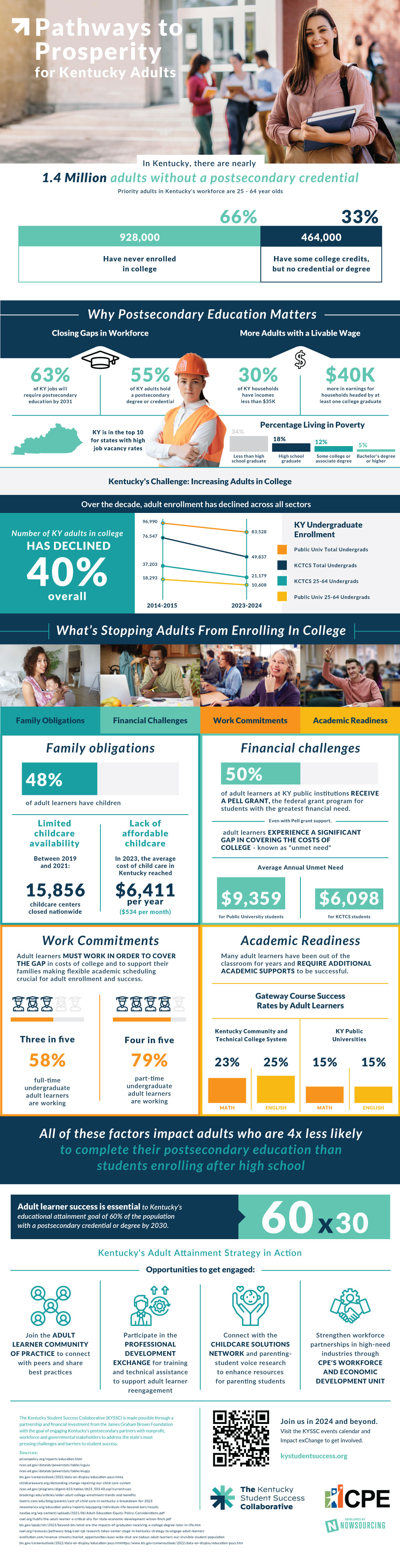
Nearly 1.4 million adults in Kentucky lack a degree after high school, with 928,000 never having enrolled in college, and 464,000 having a few college credits but no degree. With Kentucky in the top 10 for states with the highest job vacancy rates, it’s not surprising that 52% of poverty stricken individuals did not attend college or a trade school. 

A postsecondary education is critical before 2031, as 63% of jobs in Kentucky will require higher education for employment. While pursuing a degree above high school is important for closing gaps in the workforce and providing livable wages, it may not be attainable for everyone. Financial challenges, family obligations, work commitments, and academic readiness all play parts in why some are not able to pursue a degree past high school. Financial aid resources such as Pell Grants help to a certain extent but do not entirely unweight the burden of the cost of school. 

Adult learner success is imperative to Kentucky’s postsecondary educational attainment goal of 60% of the population by 2030. Strategies to ensure the success of this goal consist of Adult Learner Communities, access to professional development, connection with childcare resources, and workforce partnership strengthening events. These resources are an avid attempt to encourage adults without a postsecondary education to pursue their goals while helping overcome obstacles along the way.

Pathways to Prosperity for Kentucky Adults
Source: Kentucky Student Success Collaborative

Your Guide to School Admissions: Navigating the Process

0

Introduction

Navigating the school admissions process can be a daunting task for many families. Whether you’re looking for a new school for your child or planning to transition to higher education, understanding the steps involved is crucial. This guide will help you navigate the various aspects of school admissions, from understanding application requirements to preparing for interviews.

Understanding School Admissions

School admissions refer to the process by which students apply to enroll in educational institutions. This process can vary significantly depending on the type of school, such as public, private, or charter schools. Knowing what to expect can help streamline the experience.

Key Components of School Admissions

  1. Application Forms: These are standard documents required by schools to collect information about the student.
  2. Documentation: Schools often require documents such as report cards, birth certificates, and proof of residency.
  3. Interviews: Some schools conduct interviews to assess the student’s fit and readiness.
  4. Assessments: Standardized tests or school-specific assessments may be required for admission.

Why School Admissions Matter

1. Educational Fit

Choosing the right school is vital for your child’s academic success and personal development. Admissions processes are designed to ensure that the school can meet the needs of each student.

2. Opportunities for Growth

Schools that align with your child’s interests and strengths can provide opportunities for growth. Whether it’s advanced placement classes, extracurricular activities, or specialized programs, finding the right fit can enhance your child’s educational experience.

3. Community and Support

Selecting a school is also about finding a community. Schools foster environments where students can develop relationships with peers and educators, crucial for social and emotional growth.

Preparing for School Admissions

1. Research Schools

Start by researching schools in your area. Consider factors such as:

  • Curriculum: Does the school offer the subjects and programs that interest your child?
  • Extracurricular Activities: What clubs, sports, and arts programs are available?
  • School Culture: Visit the school’s website and read reviews to understand the school’s values and community.

2. Understand Admission Requirements

Each school has its own admission requirements. Familiarize yourself with what is needed, including:

  • Application deadlines
  • Required documents
  • Testing or interview processes

3. Gather Necessary Documents

Prepare a checklist of required documents to ensure you have everything ready for the application. Common documents include:

  • Previous report cards or transcripts
  • Standardized test scores (if applicable)
  • Letters of recommendation

The Application Process

1. Fill Out Application Forms

Complete the application forms thoroughly. Pay attention to details and ensure all information is accurate.

2. Write a Personal Statement

Many schools ask for a personal statement or essay. This is your chance to highlight your child’s strengths, interests, and aspirations.

3. Prepare for Interviews

If interviews are part of the admissions process, practice common questions with your child. Encourage them to express their interests and motivations for wanting to join the school.

4. Follow Up

After submitting applications, follow up with the schools to confirm that all materials have been received and to check on the timeline for decisions.

Understanding Acceptance and Rejection

1. Acceptance

If your child is accepted, review the school’s enrollment procedures, including tuition (if applicable), orientation dates, and supply lists.

2. Rejection

If your child is not accepted, it’s important to stay positive. Reach out to the school for feedback and consider applying to other institutions.

3. Waitlists

Some schools may place students on a waitlist. Understand the implications of this status and stay in touch with the school for updates.

Navigating School Admissions at CCA

If you’re considering enrolling your child at CCA (Christian Community Academy), understanding the specific process can make a difference. The school emphasizes holistic development and offers various programs tailored to student needs.

For detailed information on the specific requirements and steps for enrollment, check out their School Admissions page.

Tips for a Successful Admission Process

1. Start Early

Begin the admissions process early to avoid last-minute stress. Familiarize yourself with deadlines and prepare documents in advance.

2. Stay Organized

Create a timeline and checklist to track important dates and required materials. Staying organized can significantly reduce anxiety.

3. Communicate Openly

Maintain open communication with your child about the process. Discuss any concerns and celebrate milestones together.

4. Seek Support

Don’t hesitate to reach out to school counselors or current parents for advice and insights about the admissions process.

Conclusion

Navigating the school admissions process may seem overwhelming, but with the right preparation and information, you can ensure a smooth transition for your child. Researching schools, understanding requirements, and staying organized will help you make informed decisions. For more information on specific admissions processes, including detailed requirements at CCA, visit School Admissions.

4 Tips for Choosing New Linens for Your Hotel Business

0

Running a hotel business can mean there are many decisions that you will have to make so that you can make sure your guests feel as comfortable as possible during their stay. One of these key decisions will be in the linens that you choose for your hotel. This can range from sheets and towels to tablecloths and napkins for your dining area. With so many options available to your business, it can be difficult to know which one to choose. Here are four tips that will help you in your decision to choose the right linens for your hotel.

1- Understand Linen Types That Are Available

Before you start buying linens for your hotel business, you need to understand the types of linens that are available to purchase. You will want to learn about linen types, quality, materials, and more. This way, you will be able to make an informed decision on what types of linen you want to shop for when you are adding or replacing linens in your business.

2- Assess the Quality of Your Options

Getting a great price doesn’t always mean you are getting a great product. You must assess the quality of the linen types that you are considering. The key question would be whether you would want to use these linens if you were staying in a hotel. If they aren’t up to your standard, you may want to see what a higher quality linen type will look like, and how this will impact your hotel’s linen supply budget. A higher standard of quality will help to impress all of your guests.

3- Consider the Maintenance Routine

Another consideration for the type of linens that you choose for your hotel is what will be required for maintaining the linens. You want to make sure that you have a standard system in place to properly clean and sanitize your linens, but if you choose linens that need extra care, you must be able to provide that for a thorough cleaning.

You should also consider long-term maintenance for your linens. If the linens have a tendency to break down faster than other types, you may want to choose a more durable linen type that will help you save on long-term costs.

4- Listen to Guest Feedback

If you are still unsure as to which linens you should choose from your hotel business, gathering customer feedback can be a great way to see what your customer base is expecting. If you have received a number of complaints or concerns about your current linen quality, it would be wise to choose a higher quality product when you buy new hotel linens. However, if you are not getting complaints, you may be able to choose linens of the same quality to maintain your hotel’s standard.

These are just some of the things that you can consider when you are making a choice between new linens for your hotel. Along with proper care and maintenance, you can choose from a wide range of styles and prices.

The Best Gift For Someone Who Has Lost A Pet

0

How To Simplify Prior Authorizations

0

For many healthcare providers, prior authorization automation requests have proven notoriously difficult. 27% of physicians say their requests are always denied, and 35% of physicians claim that the criteria for prior authorization are rarely evidence-based. This can make it extremely frustrating, costly, and time-consuming for both physicians and administrative teams alike to fill out, monitor, and appeal prior authorization decisions. Often, this has led to 35% of physicians to hire solely for the role of working on prior authorization requests. But what if there was a better way to compile medical charts, fill out PA requests, and constantly monitor their status?

Fortunately, Orbit AI and technology like it have come out to automated as much as 82% of the prior authorization process. This has shown to have better accuracy than human-completed PA requests and takes less than 5 minutes to perform these prior authorization processes. This means that the administrative burden that PA requests have is slashed and around 12 hours is saved per staff member, per week. Most importantly, this helps to avoid the negative patient outcomes experienced while waiting for prior authorization requests to be approved. Regardless of what you want it for, these prior authorization systems have a benefit to offer your business.

Prior Authorization Automation
Source: Orbit Healthcare

The Unsung Heroes Behind the CEOs

0

In the shadow of every great CEO stands a crucial figure—the Chief Operating Officer (COO). Despite the critical role COOs play in over 40% of the world’s top companies, they often lack a standardized job description and even the formal title of COO. These seconds-in-command are the CEO’s secret weapons, adapting their roles based on the needs of the CEO, the stage of the company, and the unique dynamics of the leadership team. They serve not only as executors and strategists but also as mentors, partners, and potential successors.

COOs are multifaceted leaders who execute daily strategies, lead significant changes, and mentor CEOs, thereby shaping the company’s future. Their ability to juggle multiple responsibilities and transform strategic visions into actionable plans is indispensable. Yet, the scarcity of true COOs—with a ratio of four entrepreneurs per COO—underscores a significant leadership gap.

This scarcity is compounded by modern challenges such as digital transformation, workforce instability, and internal inefficiencies that cost companies 20% to 30% of their revenue annually. To bridge this gap, DianeIntegrates.com offers essential services to support and enhance the effectiveness of COOs. This platform assesses, coaches, and upskill COOs, facilitating personal and organizational growth. Through strategic support, DianeIntegrates.com equips COOs to lead proactively and manage the complexities of modern business landscapes, ensuring they are not just operational leaders but visionary executives who significantly impact the company’s success.

Everyone Helps The CEO, But Who Helps The Second in Command?
Source: Diane Integrates

The Importance of Accordion Partition Walls in the Office

0

In modern office design, flexibility and efficiency are essential to optimizing space while maintaining a productive work environment. One of the most effective solutions for achieving this balance is the use of accordion partition walls or accordion dividers. These mobile, space-saving dividers provide numerous benefits to office spaces, from fostering collaboration to improving privacy, and they are an excellent investment for organizations looking to adapt their spaces to evolving needs.

Space Optimization and Flexibility

The primary advantage of accordion partition walls is their ability to optimize space. In open-plan offices, space can often be a constraint. Traditional walls are permanent and take up valuable square footage, limiting a company’s ability to adapt the office layout as the team or projects grow. Accordion partition walls, on the other hand, are temporary, retractable, and customizable, allowing for dynamic use of available space. When more room is needed for a large meeting or a company event, the dividers can be folded away quickly. Similarly, when smaller spaces are required, such as for breakout sessions or individual work, the walls can easily be re-extended.

This flexibility is vital in today’s fast-paced work environment, where changes in team sizes, project demands, and work patterns occur frequently. Accordion walls provide the ability to quickly transform open spaces into private, quieter areas, making it easier for teams to switch between collaborative and focused work.

Enhanced Privacy and Noise Control

Another important feature of accordion partition walls is their ability to enhance privacy in an open office environment. As offices become more collaborative, the need for quiet spaces where employees can work without distractions also increases. Accordion walls help create secluded areas where individuals or teams can work on sensitive tasks, such as discussing confidential information or conducting performance evaluations, without the risk of being overheard.

In addition to providing privacy, these accordion dividers are effective at controlling noise. Open-plan offices, though great for collaboration, are often noisy and distracting. This can affect productivity and concentration levels. Accordion partition walls, especially those made with soundproofing materials, reduce the transmission of noise across the office, creating quieter work zones where employees can focus. This dual benefit of privacy and noise control makes accordion dividers indispensable in offices that want to support a variety of work styles.

Cost-Effective and Easy Installation

Installing permanent walls or doing major renovations to divide office space can be expensive and time-consuming. Accordion partition walls provide a cost-effective alternative. They are typically more affordable than building new walls and don’t require significant construction work, which minimizes disruption to the office routine. In most cases, accordion walls can be installed with minimal effort and time, making them ideal for organizations that need quick and temporary solutions.

Additionally, these dividers are highly customizable, with a wide range of colors, finishes, and materials available to match the office decor. Some even come with integrated features, like whiteboards or magnetic surfaces, adding extra functionality to the space.

Conclusion

Incorporating accordion partition walls into the office environment offers a range of benefits that can dramatically improve how office space is used. They provide flexibility, optimize space, enhance privacy, control noise, and offer a cost-effective alternative to traditional renovations. As companies continue to prioritize adaptable, multi-functional workspaces, accordion dividers are becoming a key element in modern office design.

How Jason Hope Spots the Next Big Technology Trends

0

In the fast-paced world of technology, spotting the next transformative trend before it hits the mainstream can be the difference between leading innovation and playing catch-up. Few people have demonstrated the foresight and vision of Arizona technology entrepreneur Jason Hope, the Arizona-based entrepreneur and futurist who has repeatedly positioned himself at the forefront of technological evolution. From his early recognition of mobile technology’s potential to his prescient advocacy for the Internet of Things (IoT), Hope has established himself as someone with an uncanny ability to see around technological corners.

“The most valuable skill in tech isn’t coding or engineering—it’s pattern recognition,” explains Hope. “It’s about seeing connections between emerging technologies and human needs before those connections become obvious to everyone else.”

But how exactly does Hope identify which technological developments are worth watching? What methodology underlies his remarkable track record of spotting pivotal innovations before they transform industries? By examining Hope’s approach, we can gain valuable insights into identifying tomorrow’s game-changing technologies today.

The Hope Method: Looking Beyond the Hype Cycle

Unlike many tech prognosticators who chase headlines or fall for overhyped trends, Hope employs a methodical approach to technology forecasting that combines data analysis, market understanding, and a deep appreciation for how technology intersects with human behavior.

“I look for technologies that solve fundamental human problems, not just technical challenges,” Hope explains. “The most transformative innovations aren’t just technically impressive—they address persistent human needs in ways that weren’t previously possible.”

This philosophy guided Hope’s early investment in mobile communications through his company Jawa. While others saw mobile technology as merely an extension of existing communication platforms, Hope recognized it as a fundamental shift in how people would interact with information and each other. This same insight later informed his early advocacy for IoT, which he understood would transform everyday objects into information-gathering, network-connected devices.

“When I began talking about IoT years ago, many people dismissed it as a gimmick—internet-connected refrigerators that could order milk seemed unnecessary,” Hope recalls. “But I recognized that the true value wasn’t in any single connected device but in the ecosystem of intelligence that would emerge when billions of devices began sharing data and responding to that information.”

Hope’s methodology for identifying significant technological trends involves several key principles that anyone can apply:

1. Focus on Infrastructure, Not Applications

One of Hope’s most consistent insights is that the truly transformative technologies are often infrastructure-level innovations that enable entirely new categories of applications.

“I pay close attention to fundamental technology shifts, not just flashy products,” Hope says. “Cloud computing, 5G networks, edge computing—these infrastructure developments create the foundation for thousands of applications that weren’t previously possible.”

This principle explains Hope’s in-depth analysis of connected technologies. He recognized that embedding connectivity and sensors into everyday objects would create an entirely new data infrastructure layer upon which countless applications could be built. Today, we see this vision manifesting in everything from precision agriculture to remote patient monitoring and smart city initiatives.

2. Watch for Cross-Industry Convergence

Another key element of Hope’s approach is identifying points of technological convergence across different industries.

“The most exciting innovations often happen at the intersection of previously separate fields,” Hope explains. “When technologies from different domains begin combining in new ways, that’s when transformation accelerates.”

Hope points to several current convergence trends worth watching: the merger of artificial intelligence with robotics, creating autonomous systems capable of adapting to complex environments; the combination of IoT sensors with blockchain technology for secure, trustless transactions; and the integration of genomics with big data analytics, powering personalized medicine approaches.

This focus on convergence explains Hope’s interest in regenerative medicine, which sits at the intersection of biotechnology, data science, and medicine. Through his significant financial support of the SENS Research Foundation, Hope has backed research that leverages tools from multiple disciplines to address the fundamental mechanisms of aging.

3. Identify Accelerating Price-Performance Curves

According to Hope, one of the most reliable indicators of transformative technology is a rapidly improving price-performance ratio that makes previously expensive capabilities suddenly accessible.

“I pay close attention to technologies experiencing exponential improvements in capability while simultaneously becoming more affordable,” Hope notes. “When something that was prohibitively expensive becomes economically viable, entirely new use cases emerge almost overnight.”

Hope points to several current technologies exhibiting this characteristic: the plummeting cost of gene sequencing, which has fallen from billions to hundreds of dollars per genome; the dramatic improvement in AI capabilities combined with decreasing computational costs; and the rapidly falling price of sensors, making it economical to connect previously “dumb” objects to networks.

“These price-performance improvements aren’t just incremental changes—they’re paradigm shifts that entirely redefine what’s possible,” Hope emphasizes.

4. Follow Human Behavior, Not Just Technical Capabilities

While many futurists focus exclusively on technical specifications and capabilities, Hope’s technology commentary incorporates a keen understanding of human psychology and behavior.

“Technology only transforms society when it aligns with how humans actually behave, not how we think they should behave,” Hope explains. “I look for technologies that remove friction from desirable activities or that make previously complex processes simple and intuitive.”

This human-centered approach has guided Hope’s thinking across multiple domains. In IoT, for instance, he has emphasized that successful connected products must integrate seamlessly into users’ lives rather than requiring significant behavioral changes. Similarly, his interest in longevity research focuses not just on extending lifespan but on improving quality of life—a distinction that reflects his understanding of what people truly value.

Technologies on Hope’s Radar Today

Based on these principles, what emerging technologies does Jason Hope believe are worth watching closely today? Several areas stand out in his current analysis:

The Convergence of AI and IoT into Ambient Intelligence

Hope sees tremendous potential in the integration of artificial intelligence with ubiquitous IoT sensors, creating environments that can understand and respond to human needs without explicit commands.

“We’re moving beyond the era of having to actively engage with technology through screens and keyboards,” Hope predicts. “The next wave will feature environments that understand context, anticipate needs, and respond appropriately without requiring conscious interaction.”

This ambient intelligence could transform everything from healthcare (with homes that detect early signs of health issues) to productivity (with workspaces that automatically adjust to optimize for different activities) to sustainability (with buildings that precisely manage resources based on actual usage patterns).

Biotech Beyond Medicine

While much biotechnology focus remains on treating disease, Hope’s approach to future technologies sees enormous potential in applications beyond traditional medicine.

“The tools of biotechnology—from CRISPR gene editing to synthetic biology—are becoming more accessible and controllable,” Hope notes. “This democratization will drive innovation far beyond pharmaceutical applications into fields like materials science, energy production, and environmental remediation.”

Hope points to companies developing biodegradable plastics using engineered microorganisms, creating building materials by growing structural components rather than manufacturing them, and designing microbes that can extract rare minerals from waste streams. These applications align with Hope’s interest in preventing problems rather than treating symptoms—the same philosophy that drives his support for anti-aging research.

Distributed Autonomous Organizations

Emerging from the blockchain and cryptocurrency space, distributed autonomous organizations (DAOs) represent an entirely new model for human cooperation and resource allocation. Hope sees significant potential in these self-governing entities that operate according to transparent rules encoded on blockchain systems.

“DAOs could reinvent everything from corporate governance to community organization to public services,” Hope suggests. “By providing trustless frameworks for collaboration, they could dramatically reduce transaction costs in many domains and enable new forms of global cooperation.”

This interest reflects Hope’s consistent focus on systems that democratize access and create opportunity—a theme evident in his philanthropic support for educational initiatives and his advocacy for technologies that level playing fields.

The Futurist’s Mindset: How to Think Like Jason Hope

Beyond specific technological predictions, Hope’s insights on space exploration technology offer broader guidance for cultivating the futurist mindset that has served him so well throughout his career.

“Successful technology forecasting requires intellectual flexibility—the willingness to constantly reassess assumptions as new information emerges,” Hope advises. “It also demands patience. The most significant technologies often develop more slowly than we expect initially but then accelerate suddenly once key thresholds are crossed.”

Hope also emphasizes the importance of first-principles thinking—analyzing technologies based on fundamental physical, economic, and psychological realities rather than by analogy to existing systems. This approach has helped him identify opportunities that others miss when they’re too anchored to existing paradigms.

Perhaps most importantly, Hope advocates for maintaining a focus on human impact rather than technological capability for its own sake. “Technology is ultimately valuable only insofar as it improves human lives,” he concludes. “The most significant innovations make people healthier, happier, more connected, or more capable in meaningful ways. Keep that human focus at the center of your thinking, and you’ll be much more likely to spot the truly transformative trends before others do.”

For business leaders, entrepreneurs, and anyone trying to navigate our rapidly evolving technological landscape, Hope’s technology roadmaps and initiatives offer valuable guidance for distinguishing between fleeting tech fads and the genuine game-changers that will shape our future. His approach, combining analytical rigor with human-centered thinking, demonstrates why professional technology forecasters like Hope remain essential guides in our increasingly complex technological landscape.

 

Build or Buy: The Future of Insurance Card Capture

0

Insurance capture and verification is a vital process that must be modernized in order to remain effective. Currently, the outdated methods for carrying out this process are not up to par, leaving room for improvement and innovation. The cost of insurance errors and denied claims are highly significant. In fact, in the healthcare sector alone, insurance denials cost $262 billion per year. That equates to anywhere from $30 to $71 per lost claim in additional expenses.

This lost revenue must be remedied, however, existing options for insurance benefit verification automation leave much to be desired. From traditional paper and clipboard manual labor, to even the most advanced OCR intake, these methods remain outdated and error prone. The bottom line is that older systems do not offer the tools needed to succeed, leaving many in search of a more effective and modern method.

Artificial intelligence has risen to the top of the totem pole of insurance capture technology. Within this new system, one can either buy or build these systems using AI. Both options offer pros and cons, with most drawbacks centered around complexity and cost. Fortunately, there are services working to create the best of both worlds. The future is bright for insurance verification, with robust, future-proof, and cost-effective methods quickly becoming the new norm.

Build vs Buy - Orbit Healthcare - Insurance Benefit Verification Automation
Source: Orbit Healthcare