
When it comes to pricing loans, a plethora of factors are involved. Anticipated economic conditions, current inflation, and a lender’s expected longevity are all major factors to consider. However, the prospective borrower’s individual factors are arguably just as important, if not more so. Therefore, lenders have traditionally relied upon a tri-merge credit report. This involves ordering credit reports from TransUnion, Equifax, and Experian and combining the information from all 3 sources. After comprehensively reviewing the prospective borrower, the median credit score from the 3 to determine the loan’s price.
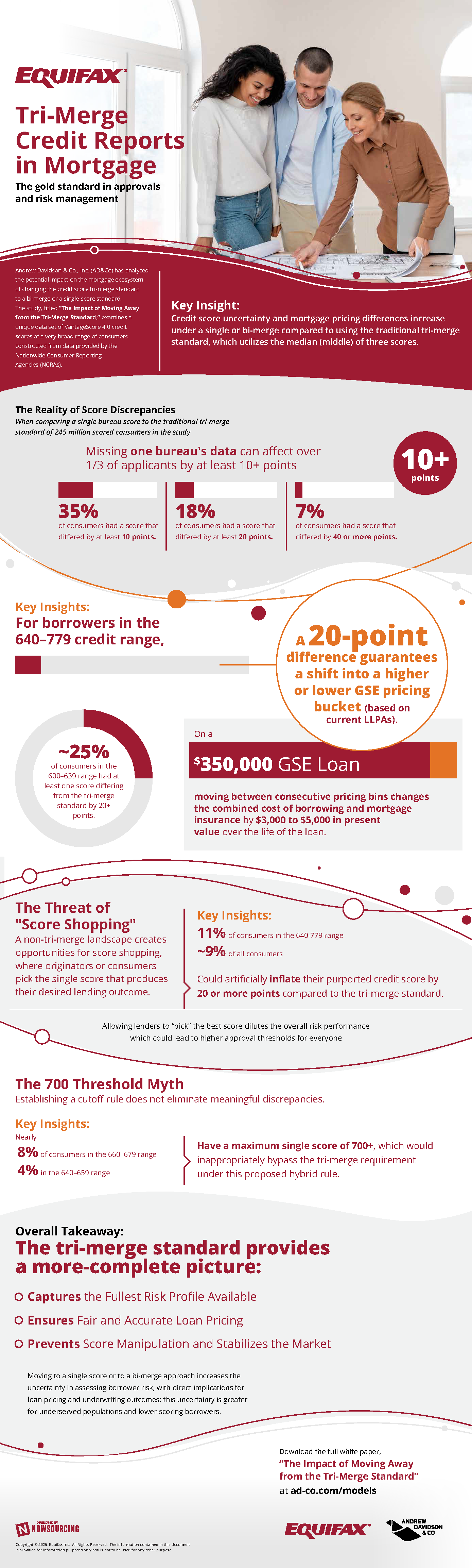
However, not all lenders use this type of credit report. Some lenders utilize a bi-merge credit report, which sources information from only 2 of the 3 major credit bureaus. While this can be easier to obtain, there is a great deal of accuracy lost by omitting that third bureau. In fact, it is estimated that over one-third of prospective borrowers saw a credit score change of 10 points or higher when comparing their tri-merge and bi-merge credit scores. While this may seem small, inappropriately pricing a loan could cost either lenders or borrowers thousands of dollars.
Ultimately, to ensure that borrowers are getting an accurate rate, obtaining as much information as possible is paramount. The best way to go about this is to maintain the standard and rely upon tri-merge credit reports.
Source: Equifax

