Home Blog Page 47

Meeting the Demands of Tomorrow with Remote Work

0

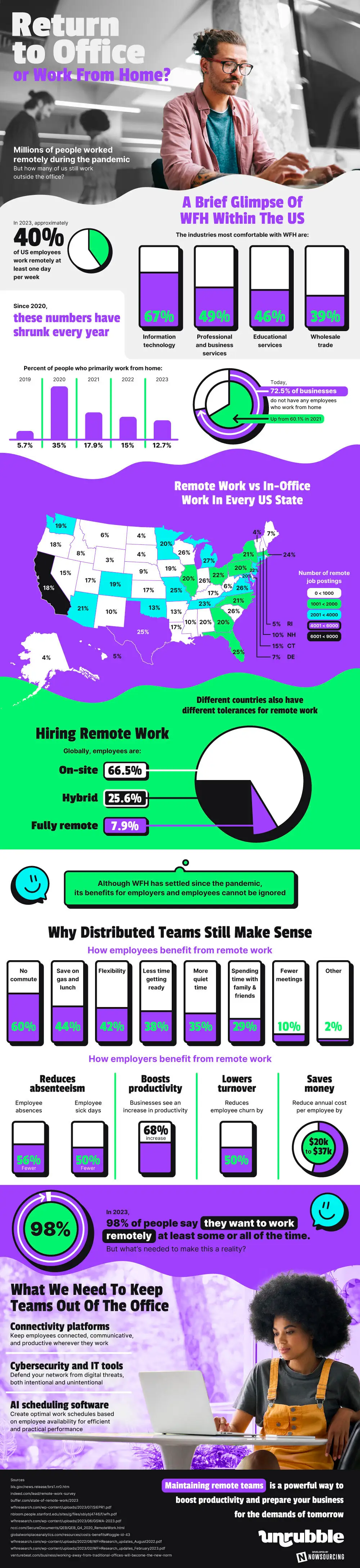
After the surge of remote work opportunities triggered by the COVID-19 pandemic, there was never a true return to the office. In 2023, approximately 40% of U.S. employees still work remotely at least once a week, especially those in tech and business fields. Although the number of people who primarily work from home has drastically decreased since 2020, there are still remote work opportunities in nearly every state.

The benefits that working from home presents for workers and employees cannot be denied. Teams that work from home save precious time and money on commute and preparation. They are granted more flexibility and freedom in their work, increasing workplace happiness and allowing for more personal time spent with friends and family. Employers also reap the benefits of remote work. Employees are more enticed to show up to work, boosting productivity, lowering turnover, and overall improving the efficiency of the company.

Survey data shows that nearly 100% of people in 2023 say that they want to work remotely at least some of the time. In order to make this a reality, strong digital tools are a necessity. With the proper platforms, software, and employee tech support, the demands of tomorrow can be met in the digital space.

Return To Office or Work From Home?

The Modern Subscription Boom

0

Few things have gained as much importance as practicality in the last few years. The convenience of phones, computers, the internet, and transportation are more desired than ever. Consequently capitalizing on this desire for convenience has become incredibly popular. Subscriptions are just one example of how services and products have changed towards this end.

The most obvious and recent example comes in streaming services. Companies like Netflix and Hulu have dominated an entire market through their subscription models. A similar revolution of commerce has occurred in music and now is beginning in gaming. Although subscriptions exist in much more than these limited industries.

Amazon Prime, for example, is one of the biggest subscription services in existence. For anyone buying off of Amazon even somewhat regularly it’s simply a great cost effective purchase. Sam’s Club and Costco also represent a subscription where its effectiveness comes from its use. 

Subscriptions saw a big boom during COVID. People, even now, want to go out less than before. The practicality offered by delivered products, be them necessary or not, is appealing. Now there are subscriptions for necessities like food and toiletries, but also themed monthly boxes of decorations or other pleasantries. 

These are just a few of the biggest and most popular examples, but countless industries are now utilizing subscriptions. Currently the balance between consumers and businesses being happy is met, but that may be subject to change. What’s certain is that subscriptions are here to stay.

Data shows subscriptions are here to stay 

What Are Some Technologies That Can Prevent Deaths On The Road?

0

The roads are getting more dangerous every year.

And we can change that with the help of new technologies.

New technological innovations have emerged as crucial allies in the battle against traffic fatalities. From advanced driver assistance systems to sophisticated communication networks, these technologies hold the potential to reshape the landscape of road safety.

But what are the technologies that can keep you safer on the road? Let’s find out.

Advanced Driver Assistance Systems (ADAS)

At the forefront of the road safety revolution are Advanced Driver Assistance Systems (ADAS). These encompass a suite of technologies designed to enhance vehicle safety and mitigate the risk of accidents.

Collision avoidance systems, for instance, utilize sensors and cameras to detect obstacles in a vehicle’s path, providing timely warnings or even intervening to prevent a collision.

In addition, lane departure warning and lane-keeping assistance systems contribute to preventing accidents caused by unintentional lane drift. On the other hand, adaptive cruise control and automatic emergency braking systems further bolster the safety net, particularly in high-traffic situations.

Vehicle-to-Everything (V2X) Communication

The advent of Vehicle-to-Everything (V2X) communication heralds a new era in road safety. V2X enables vehicles to communicate not only with each other (V2V or Vehicle-to-Vehicle) but also with the surrounding infrastructure (V2I or Vehicle-to-Infrastructure).

This exchange of information facilitates real-time awareness of potential hazards, traffic conditions, and road infrastructure, contributing to proactive accident prevention. By harnessing V2X communication, vehicles can collectively work towards creating safer driving environments and reducing the likelihood of accidents.

Intelligent Transportation Systems (ITS)

Intelligent Transportation Systems (ITS) represent a comprehensive approach to leveraging technology for enhanced road safety.

Traffic management and signal control systems optimize traffic flow, mitigating congestion and reducing the risk of accidents.

Real-time traffic monitoring and information dissemination ensure that drivers are well-informed about changing conditions, allowing for timely route adjustments. Smart intersections and connected road infrastructure further contribute to accident prevention by enabling safer and more efficient traffic interactions.

Telematics and Fleet Management

Telematics and fleet management technologies play a pivotal role in promoting safe driving practices, particularly in the realm of commercial transportation.

Telematics systems monitor various aspects of vehicle performance, providing valuable insights into driver behavior and vehicle conditions. In addition, fleet management solutions utilize this data to implement proactive safety measures, including driver coaching and real-time feedback, reducing the likelihood of accidents caused by human error.

Mobile Apps for Safe Driving

In the age of smartphones, mobile applications have emerged as effective tools for promoting safe driving habits.

Distracted driving prevention apps use sensors to detect when a vehicle is in motion, discouraging smartphone use while driving. Gamification elements, such as rewards for safe behavior, further incentivize drivers to adopt and maintain safe driving practices.

Cell Phone Monetoring

Cell phone monitoring can play a significant role in keeping teenage drivers safe on the roads. With distracted driving being a major cause of accidents among this demographic, monitoring apps can provide parents with insights into their teen’s driving behavior, including instances of texting or using apps while behind the wheel. By implementing such monitoring systems, parents can initiate conversations about safe driving habits and intervene if risky behaviors are detected. Click for info on how cell phone monitoring can help ensure the safety of young drivers on the road.

Road Safety Data Analytics

Harnessing the power of big data, road safety data analytics offer a comprehensive understanding of traffic patterns, accident trends, and risk factors.

Predictive modeling identifies potential risks, allowing authorities to implement targeted interventions and allocate resources strategically. Data analytics also inform policy decisions and infrastructure improvements, creating a more adaptive and responsive approach to road safety.

Public Awareness and Education

Technology not only operates in the realm of hardware and software but also plays a crucial role in shaping public awareness and education.

Road safety campaigns leverage technology to disseminate information, promote responsible driving behavior, and raise awareness about the dangers of reckless driving. Collaborations between technology companies, government agencies, and non-governmental organizations (NGOs) amplify the impact of these campaigns, fostering a culture of safety on the roads.

What To Do If You’ve Been Affected By A Wrongful Death

If you have been in a situation where a loved one passed away due to a negligent driver on the road, you should call a Westminster personal injury attorney.

By calling a lawyer, an expert team can help you fight for the rights of your loved one who perished, while also fighting for the compensation that you truly deserve.

Be Safe On The Roads Today

In the relentless pursuit of road safety, technology stands as a beacon of hope, offering innovative solutions to prevent deaths on the road.

From advanced driver assistance systems to the power of data analytics, each technological stride contributes to a comprehensive approach towards creating safer roadways.

As time passes by, it’s not just about adopting these technologies but also about fostering a culture of responsibility, collaboration, and continuous improvement. In doing so, we pave the way for a future where technology can help make the roads safer and reduce deaths in the process.
Advancing the Insurance Industry with Artificial Intelligence

0

There currently exist many challenges of time, money, and accuracy involved with traditional insurance processing methods. The current methods are outdated, and the pitfalls of denied claims can be costly. There are many reasons as to why our current methods are ineffective, emphasizing why there is a dire need for technological improvement.

Some of the main contributors to these problems involve human error. First, much of conventional insurance processing requires human expertise which leaves room for human error. Also, location complexity of different insurance companies can cause problems as well. Finally, most current solutions cannot identify any plan information that is not physically printed on a card. This limits the speed and efficiency of providers, especially those that are busy and popular.

Experts agree that an AI-powered solution for health insurance card capture is the best way to overcome human limitations in insurance processing. These new methods are faster, more reliable, and offer many more benefits than the current traditional methods in use. For example, it takes five to fifteen minutes to process insurance manually. However, with new AI technology, it can take less than five seconds to do the same job. Clearly, the time is now to make the switch, and development on these new methods are already underway.

The Smarter Way to Capture, Verify, and Process Insurance with an AI-Powered Solution
Source: OrbitHC

8 Ways to Make Buying a New Car as Seamless as Possible

0

Buying a new car can often seem hard, with many models to choose from and numerous factors to consider. Nevertheless, if you plan sufficiently, it can be a fascinating process. Learn eight ways to make buying a new car a breeze.

1. Do Extensive Research

The first step towards making car buying process seamless is to do thorough research. Start by determining your budget, car type, and any specific features you require. Look into different makes and models that fit your criteria and compare their prices, fuel efficiency, safety ratings, and maintenance costs.

2. Determine Your Budget

Before visiting the dealer, decide how much you want to spend. Look at the total expenditure for ownership costs, including the initial purchase value, insurance, and subsequent repairs. Having this information in advance will prevent you from getting swayed by salespeople into buying a car that is out of your price range.

3. Get Pre-Approved for Financing

Rather than depending on the dealership financing, obtaining preapproval for a loan from your bank or credit union is advisable. Preapproval empowers you with greater control over the loan terms and interest rates, optimizing your financial choices.

4. Take a Test Drive

After narrowing down your options, it is crucial to embark on a test drive. This step is important in the car buying as it gives you a chance to truly experience the car’s handling and road experience. It also provides a chance to address any queries or concerns with the salesperson.

5. Consider Buying a Used Car

Opting for a used car saves you a lot compared to buying a new one. Nonetheless, it is crucial to dedicate ample time to extensive research and arrange for a comprehensive inspection by a qualified mechanic before finalizing the purchase. This gives you confidence and peace of mind in your investment. Also, consider exploring certified pre-owned cars that offer warranties to provide an additional layer of assurance and peace of mind.

6. Negotiate the Price

Embarking on this step feels intimidating, but it’s an absolute game-changer in securing the best deal for your new car. Before purchasing, dive into extensive research and uncover all the details on pricing and incentives for your dream car’s make and model. Also, be confident in negotiating for a lower price or additional features at no extra cost.

7. Don’t Rush the Process

Buying a car needs a huge financial commitment. Take your time and resist the urge to rush. Don’t fall for sales tactics or time-limited offers. Give yourself the space to make a well-informed decision. If a specific vehicle or deal fails to meet your expectations, bowing out gracefully and continuing your search is acceptable.

8. Read and Understand the Contract

Before signing any paperwork, reading and comprehending the contract thoroughly is crucial. Do not hesitate to seek clarification and ask questions about any ambiguous details. Pay close attention to all fees, warranties, and additional items outlined in the agreement.

Purchasing a new car may seem overwhelming, but employing these eight strategies can streamline the process and minimize stress. Conduct thorough research, adhere to your budget, negotiate with confidence, and allow yourself ample time. With careful planning and patience, you will soon find yourself behind the wheel of your dream car. Happy car shopping.

7 Helpful Ideas for Planning a Funeral in a Short Timeframe

0

Losing a loved one is an emotional time and experience for anyone. There’s certainly a lot of stress, and planning for a funeral with little time can add to difficulties. It’s important for people to have an idea of how to push through regardless of the pressure. Here are seven ideas that can help individuals work through grief and stress.

1- Create a Checklist of Things to Do

There are essential tasks that a person will need to promptly address, like contacting a funeral director, choosing cremation or a funeral, choosing a venue for the service, planning transportation, and notifying family and friends. A person will need a clear roadmap to remain organized and focused during this challenging time.

2- Delegate Responsibilities

People are willing to help. Turn to friends or relatives of the deceased, and assign tasks and responsibilities within their ability to follow through. This can shift lots of pressure off you, and help ensure that every aspect of the funeral service receives attention.

3- Choose a Trusted Funeral Director

Funeral directors play important roles in helping individuals plan a service. Choose a director with a reputation for providing support and handling important elements. They can help with obtaining permits, paperwork, and coordinating burial preferences for the deceased. The director helps a person focus on the emotional aspects of saying goodbye.

4- Plan for Simplicity

While planning a funeral in a short amount of time can be challenging, planning for simplicity can help manage things. You might consider choosing funeral packages that provide essential services. Consider also any benefits of holding worship services that are nearby as a convenience for family and friends. These choices also allow more time for grieving.

5- Use Technology

Technology can help you plan and communicate in ways with people that weren’t available in the past. There are digital invitations that a person can send through social media or email channels. Some people even choose to live-stream their service, where people can participate from a distance and feel included in the service. In today’s world, millions of people connect with their mobile devices.

6- Lean on Your Support Network

In this time, your support network can provide invaluable assistance. Friends and family members are there to provide the emotional support you need. They can help with tasks, and share the enormous responsibility of planning the funeral. They can also lend a shoulder for you to grieve on while also honoring the memory of your loved one.

7- Create a Session to Share Memories

Friends and family have a lot of memories to share about departed loved ones. Plan for sharing during the service, or wait to share online. This can be a time for remembering and comforting. The session can help celebrate a loved one’s life, and let everyone share in the grieving process. Careful planning is the key. Just remember that it’s okay to seek assistance from those who understand your needs.

Planning a funeral is stressful, but especially when planning one in a short timeframe. Even if you feel rushed, take time to gather your thoughts, make a plan, and think about how to best honor your loved one.

8 Simple Ways to Keep Teeth Healthy Between Dental Visits

0

Maintaining good dental hygiene is one of the best things you can do for your overall health. In between your professional cleanings, you should follow healthy oral hygiene habits to keep your smile bright and reduce the risk of dental problems. Here are eight tips to implement into your daily routine for keeping your teeth healthy and clean between dental visits.

1. Develop Good Brushing Technique

Brushing with the right technique keeps your teeth clean and protects your gums. Your toothbrush should be positioned at a 45-degree angle to your gums, and you should use small circular motions instead of scrubbing back and forth. Aim to brush your teeth for two minutes twice per day.

2. Don’t Overdo It

Brushing twice per day is vital to your oral health, but it can be risky to brush too frequently or too aggressively. Over-brushing could cause gum recession, an irreversible issue that increases your risk of tooth loss. If you tend to brush too aggressively, try switching to your non-dominant hand.

3. Floss Daily

Try to floss once per day to maintain healthy teeth and gums between your dental cleanings. Flossing removes bacteria and food particles between your teeth and prevents cavities, gum disease, and other dental issues.

4. Use Mouthwash

Mouthwash helps to wash away bacteria and food particles. However, using mouthwash immediately after brushing your teeth may wash away the fluoride in your toothpaste. Instead, use mouthwash 30 minutes after brushing your teeth or after eating lunch or a snack.

5. Reduce Sugar Intake

Sugar causes acidity and bacterial growth on your teeth and gums, which can lead to tooth decay. You don’t have to give up sugar entirely to keep your teeth healthy, but cutting back can make a big difference. Reducing your intake of sugary sodas or juices can be especially helpful. When you do consume something sugary, try to brush your teeth about 30 minutes after to prevent plaque from forming.

6. Chew Sugar-Free Gum

Not only does chewing sugar-free gum after eating keep your breath fresh, but it also helps with dental hygiene. Chewing gum promotes saliva production, which prevents bacteria from building up in your mouth and causing tooth decay.

7. Drink Plenty of Water

If you’re dehydrated, you might experience dry mouth, which increases your risk of bacteria and plaque buildup. Water helps to rinse out your mouth and prevent plaque from forming on your teeth. Try to drink water frequently throughout the day, especially during or immediately after meals and snacks.

8. Quit Smoking

Smoking can stain your teeth, harm your gums, and increase plaque formation in your mouth. You might have an increased risk of oral cancer if you’re a smoker, too. Quitting or cutting back on smoking can protect your teeth and improve your overall health.

Maintaining oral hygiene is a daily effort, but it’s an important component of your health and happiness. If you have any questions or concerns about your dental hygiene, ask your dentist for advice during your visit. Additionally, consider incorporating regular dental check-ups into your routine to ensure proactive care and early detection of any potential oral health issues, allowing for timely intervention and personalized guidance to maintain a healthy smile.

5 Benefits of Renovating Your Home Over Buying a New One

0

The housing market is tight and mortgage interest is high. If you need more space, renovating is probably a better choice than buying new, especially if your house is smaller than those on your street.

1. You Know the Neighborhood

If your children attend a local school and you’re happy with it, staying put may make better sense. Should you want something better, it may make sense to look for a transfer option. Unless your location is unsafe or your commute is extreme, you’re probably going to be happier staying in the same house.

2. You Know the History of the House

It’s a good idea to keep a running tally of repairs and replacements of the expensive things on your home. If you just bought a new HVAC system or water heater, you usually won’t get your investment back when you sell.

No matter the style if your home, there are simple updates that you can make to increase your enjoyment in the house. If you love movies and games, it may make sense to turn a den or a living room into a game space. Wired-in speakers, new window coverings and comfortable chairs could be all that you need.

3. You Can Use Your Equity Wisely

As interest rates rise, refinancing your entire mortgage may not be a wise choice. Unlike a new home purchase, you may be able to borrow solely against the equity in your home or against a retirement account to take care of the cost of your home renovation.

Unless you are really skilled, make sure you are working with a contractor you trust. Large renovation projects, such as the addition of a new kitchen or a second story, will take a great deal of knowledge and skill. If you want to keep costs down, it may make sense to do your own painting or put down vinyl plank flooring.

4. You Can Plan for the Future

Now is the time to plan for the future. If your children are grown and you plan to age in place, you can update the bathrooms and move the laundry to the main floor. If you’re just starting your family, it may make more sense to add on bedrooms or build another bathroom.

5. You’ll Save Money in the Long Run

Moving is not easy. Unexpected expenses always creep up and you may be surprised at the interest rate options on your new mortgage. If you’ve got a low interest rate and a manageable payment at this time, it may make more sense to finance your renovation separately and put any extra cash against that second loan until it’s gone.

Your new home might just be the one that you’re living in. Take your time with the renovation and carefully consider what it is that you really need. If you feel your new house is too small for your current or future needs, get creative and reimagine your floorplan to fit what you need your house to offer. For example, you could turn a formal dining room into another bedroom or an office space, and you could turn a larger laundry room into a space that includes a walk-in pantry too.

5 Important Reasons Why Every Home Needs a Security System

0

Security systems have advanced well beyond the typical door sensors and alarms. With clear HD quality, wireless connections, and advanced security detection, home security systems are not just a luxury or option for homes. They have evolved into an essential element of the home. Learn some of the reasons why every home needs a security system and how that system can change your life for the better.

1. Monitored Security and Alerts

With app availability, you can easily access a security system and see updates on a regular basis. With a monitored security system, you will eliminate the stress and anxiety that comes with those alerts. Trained security workers will check in on alerts in real-time, issue warnings, and contact authorities when needed. Having a monitored system will ensure your home remains safe, even if you’re not home.

2. Pet and Animal Safety

If you have pets, then a security system is essential for your home. Outdoor cameras can monitor pet activity and allow you to track a pet if it wanders off your property. Indoor security cameras can monitor your pet while you’re at work or out of the home.

Security systems will also help you monitor wild animals as well. Raccoons that scavenge through your trash or bigger wild animals that roam your backyard can create safety concerns if you’re unaware. A security system allows you to monitor any wild animal activity from a safe distance.

3. Mail Deliveries

Package theft is often a concern, especially with a major rise in online ordering and local delivery services for groceries and restaurant food. With a home security system, you will have a digital record of your deliveries and can monitor them on video if you are not home. You can see exactly where a postal worker placed a package and easily obtain it when you need to.

4. Smart Home Integration and Money Savings

A modern security system includes a lot more features than just video cameras and door sensors. You can integrate the security system with smart home products. Not only can you keep tabs on the condition of your house, but you can save money in the process.

For example, you can set your thermostat for both heating and central air. You can check to see which lights are on in the home and shut some off to save on your electric bill. A single app will provide connections to all of these elements and help you save in the long run.

5. Everyday Deterrent

A security system not only offers protection, but it acts as deterrent for any suspicious activity. The presence of security cameras or signs can make a big difference on your protection and may prevent someone suspicious from even approaching your home.

A security system provides all of these benefits and a lot more for home owners. After the initial installation, you will wonder why it took so long to get a security system installed in the first place and will feel better knowing the system is in place.

7 Great Reasons to Purchase a Used Car as Your First Car

0

Buying your first car is an exciting milestone! While some opt for a shiny new vehicle right off the dealership lot, purchasing a used car can be a savvier financial decision for first-time car owners. Here are 7 great reasons why getting a previously-owned auto may be the way to go.

1. Used Cars Cost Significantly Less

Obviously, the main allure of a used car is the lower price tag. Given that new vehicles depreciate by 20-30% in their first year alone, purchasing a gently used car a couple of years old can mean massive savings. This makes used cars ideal for high school or college grads just starting out financially. By spending less on your wheels, you’ll have more money left over for other post-academic expenses.

2. Insurance Tends to Cost Less

Insurance coverage is mandatory for drivers, and premiums are partly based on the value of your automobile. Since used cars have depreciated, insuring them costs substantially less than insuring a brand-new vehicle. A lower insurance payment takes some of the sting out of those annoying monthly bills.

3. Certified Pre-Owned Cars Come With Warranties

While used cars were once a riskier gamble reliability-wise, certified pre-owned (CPO) vehicles have changed the game. CPO cars have passed rigorous inspections and come with extended warranty coverage to give consumers peace of mind. Many CPO warranties are comparable to those of new cars, meaning you can get virtually the same protection for less money.

4. You Avoid That Steep First-Year Depreciation

We mentioned it already, but the initial post-purchase depreciation of new cars is steep. A new car can lose 20% or more of its initial value in just one year. With a used auto, the first owner takes that big depreciation hit. You get an almost-new car for a significant discount over the showroom models. That means you can recoup more money later should you sell it or trade it in.

5. You Can Get More Car for Your Money

While buying used means no fancy brand-new auto smell, it does allow budget-minded buyers to afford a higher-end make or model. Thanks to the lower used pricing and slower depreciation, you can step into that luxury sedan or souped-up sports car that might be out of reach if you could only look at new. More car for less money? Yes, please!

6. Interest Rates Tend to be Lower for Used Cars

These days, borrowing money for a new vehicle often means double-digit interest rates. Meanwhile, used car interest rates currently sit around 5-9% at most banks. Since the overall loan amount is also lower with a used automobile, opting for a previously owned one can save buyers hundreds in interest expenses over the loan term.

7. You’ll Learn the Art of Auto Ownership

Buying a used car for your first set of wheels eases you into car ownership gently. An older car may occasionally need repairs and maintenance. Learning your way around basic auto fixes is an invaluable experience for any new driver. Additionally, driving a used car means less stress over minor dings and scratches from everyday mishaps. While buying new is exciting, purchasing used makes the most financial and practical sense for first-time auto owners.